Early each day to the steps of Saint Paul’s
The little old bird woman comes
In her own special way to the people
She calls, “Come, buy my bags full of crumbs

Early each day to the steps of Saint Paul’s
The little old bird woman comes
In her own special way to the people
She calls, “Come, buy my bags full of crumbs
Halloween is the perfect time of the year to experience a ghost tour. The city of London has a vast array of these tours, you can choose The Theater District, Jack The Ripper or any of a number of cool locations.
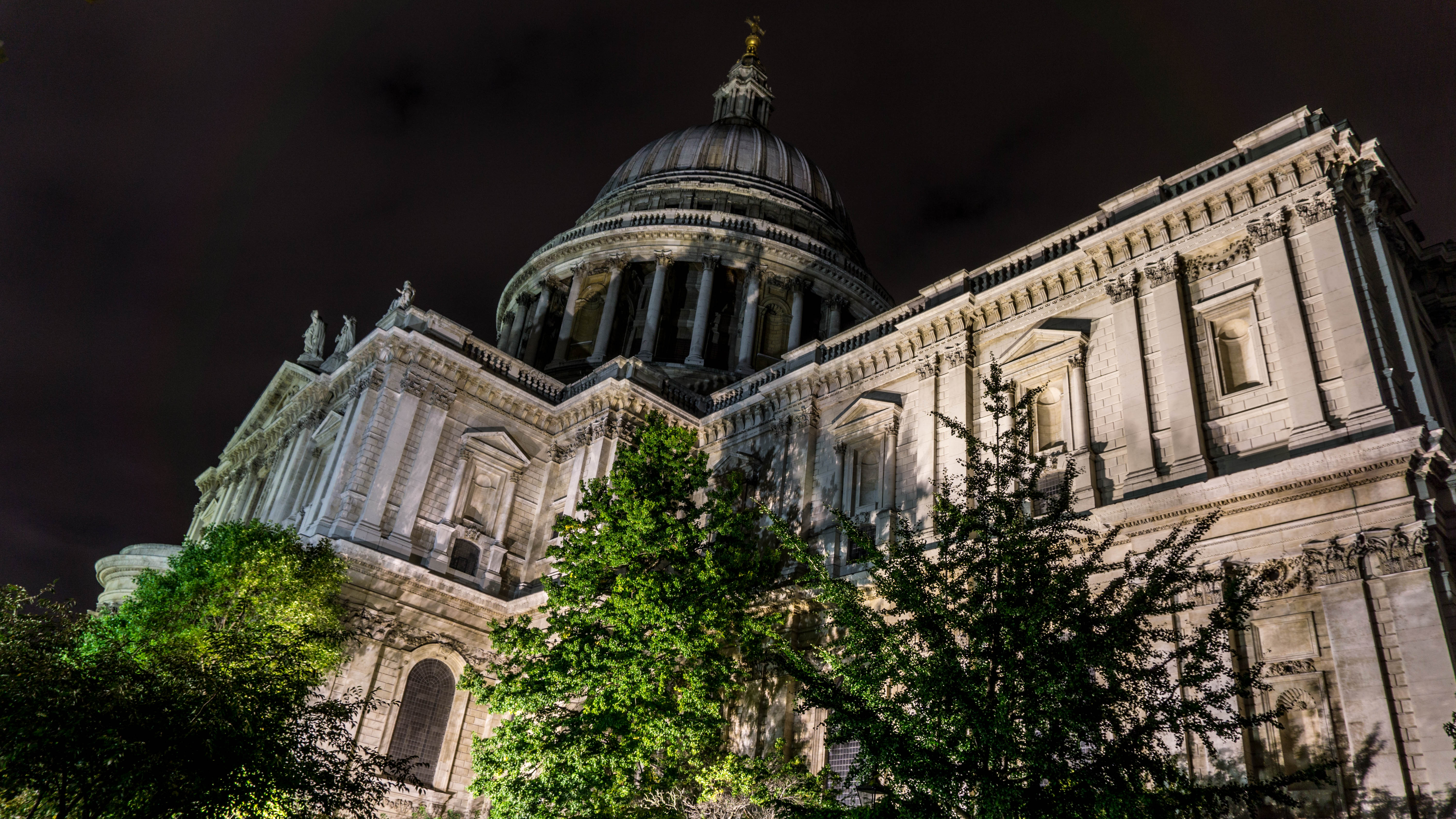
The Cathedral of St. Paul may be known the spot where Mary Poppins and the children meet the bird woman. But by night, the location takes on an eerie appearance.
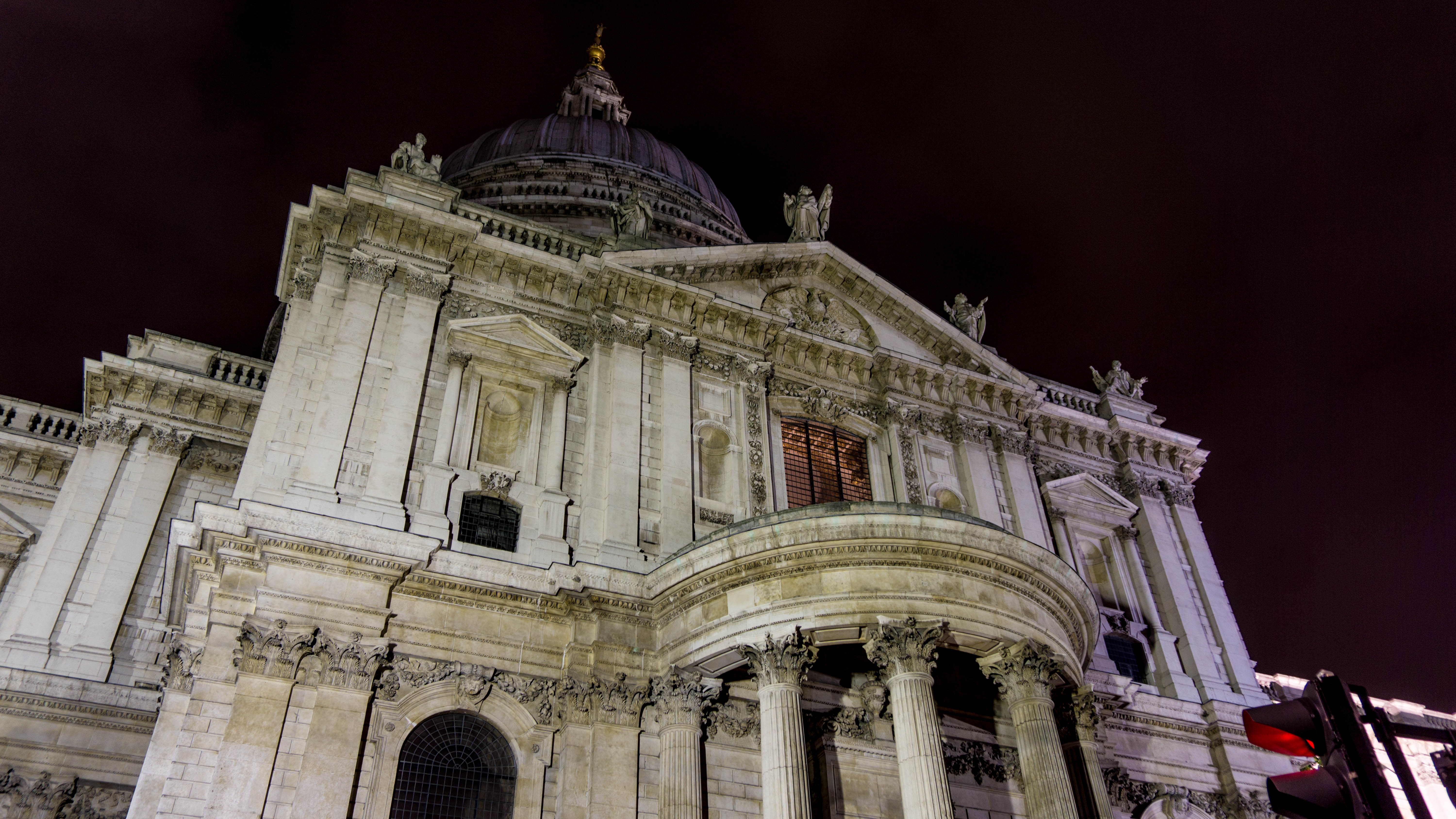
The Whistler is St. Paul’s most well-known haunting. Many have seen the visage of an elderly clergyman accompanied by a tuneless whistle. Your best chance of meeting the clergyman is to visit the Cathedral’s west end. On the ground floor of the northwest tower. When the tower was rededicated after WWI, a previously hidden door was uncovered. This is the exact spot where the whistling cleric appears to fade into the wall.
There are 2 other ghost stories captured by Irish writer and Ghost Hunter, Elliott O’Donnell. In one story an American couple experience a “great black cloud” that rose out of the floor and climbed 20 feet into the air before disappearing. They described the cloud as “alive'”.
O’Donnell’s second story involves a woman who was resting in the cathedral one afternoon. This woman spotted another woman in a pew in front of her. She seemed to be frantically looking for something. The first woman got up to help the woman, but on her way down the aisle she felt a tap on her shoulder. She spun around to find no one behind and when she resumed her walk, the other woman had vanished.
Several days later, at the same time of day, the woman saw the figure of the woman once again. She rose to offer assistance but was once again stopped by a tap on her shoulder. Just as before, there was no one behind her and in front of her the woman was gone.
LINKS:
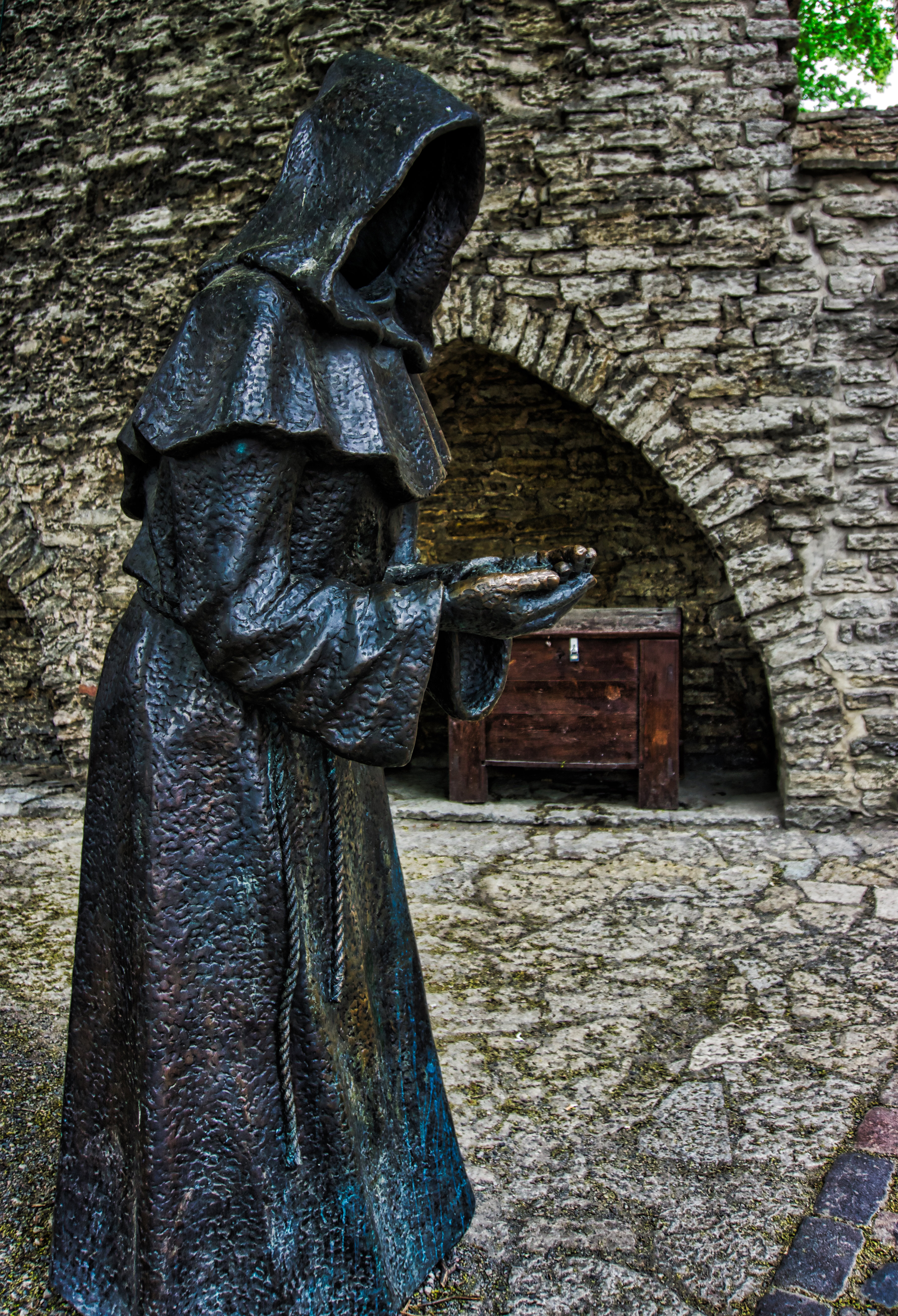
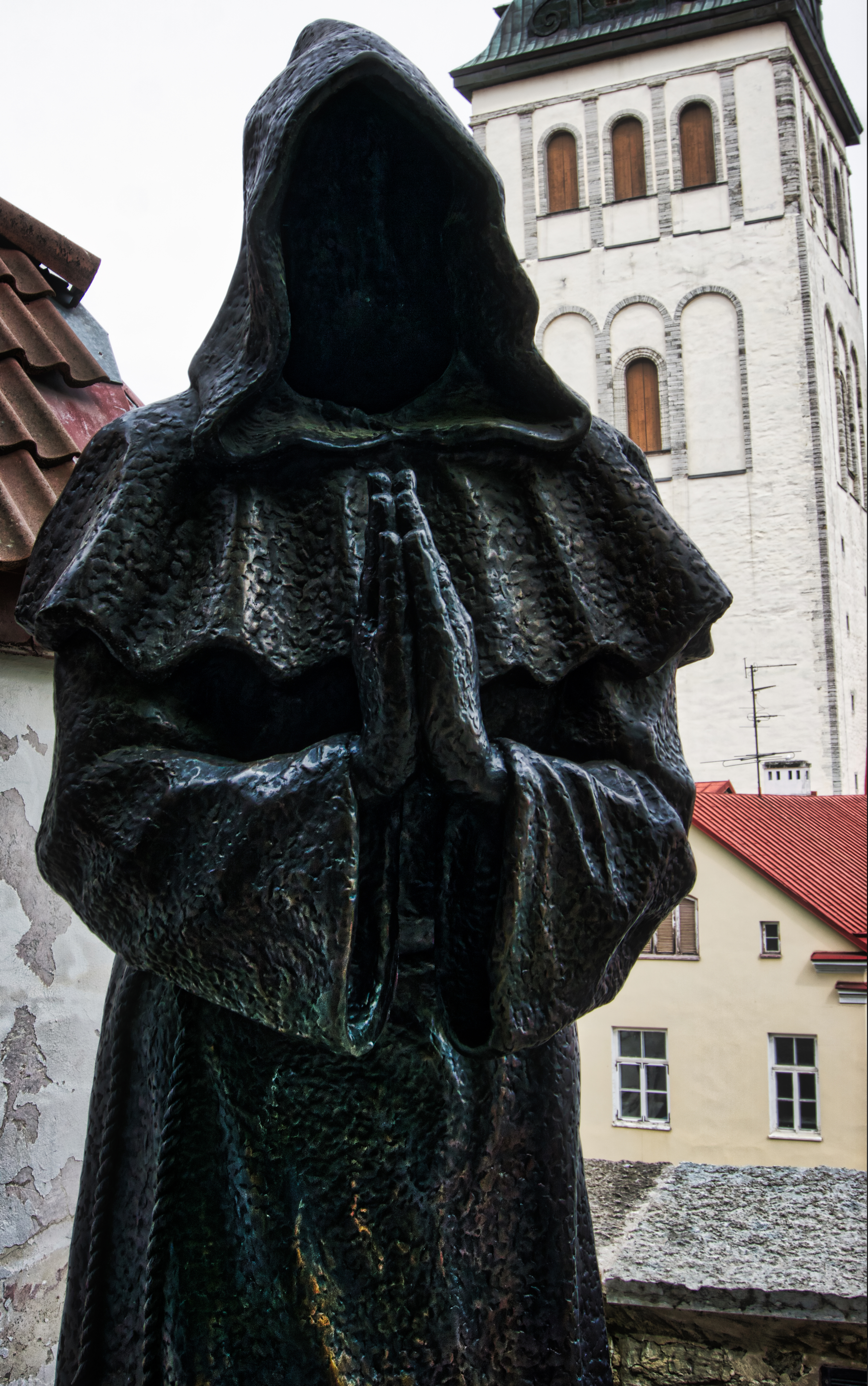
No trip to Tallin, Estonia is complete without a visit to the Danish King’s Garden. Watching over the medieval walled garden are statues of faceless monks, Ambrosius, Bartholomeus and Claudius. The legend goes, that during a losing battle, the monks prayed for divine intervention on behalf of the Danish King. Out of the sky fell a large flag, which became the national flag of Denmark.
Estonia is also considered one of the most haunted places in Europe. The King’s Garden is said to be haunted by a monk, perhaps a former executioner having a change of heart.

LINKS
Standing guard high on a promontory in Helsingor, Kronborg Slot (Kronborg Castle) was the home of Denmark rulers until the 1600’s. 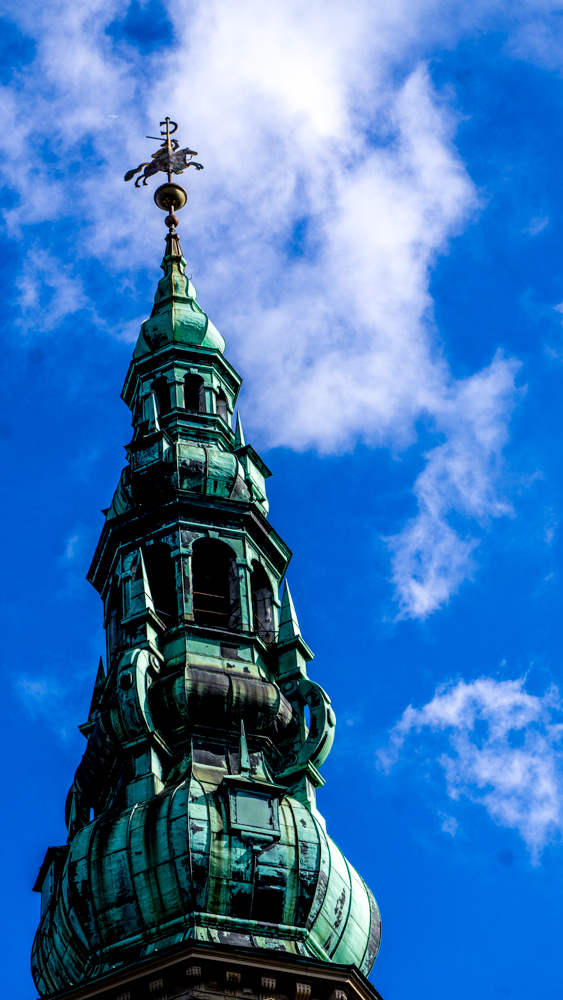
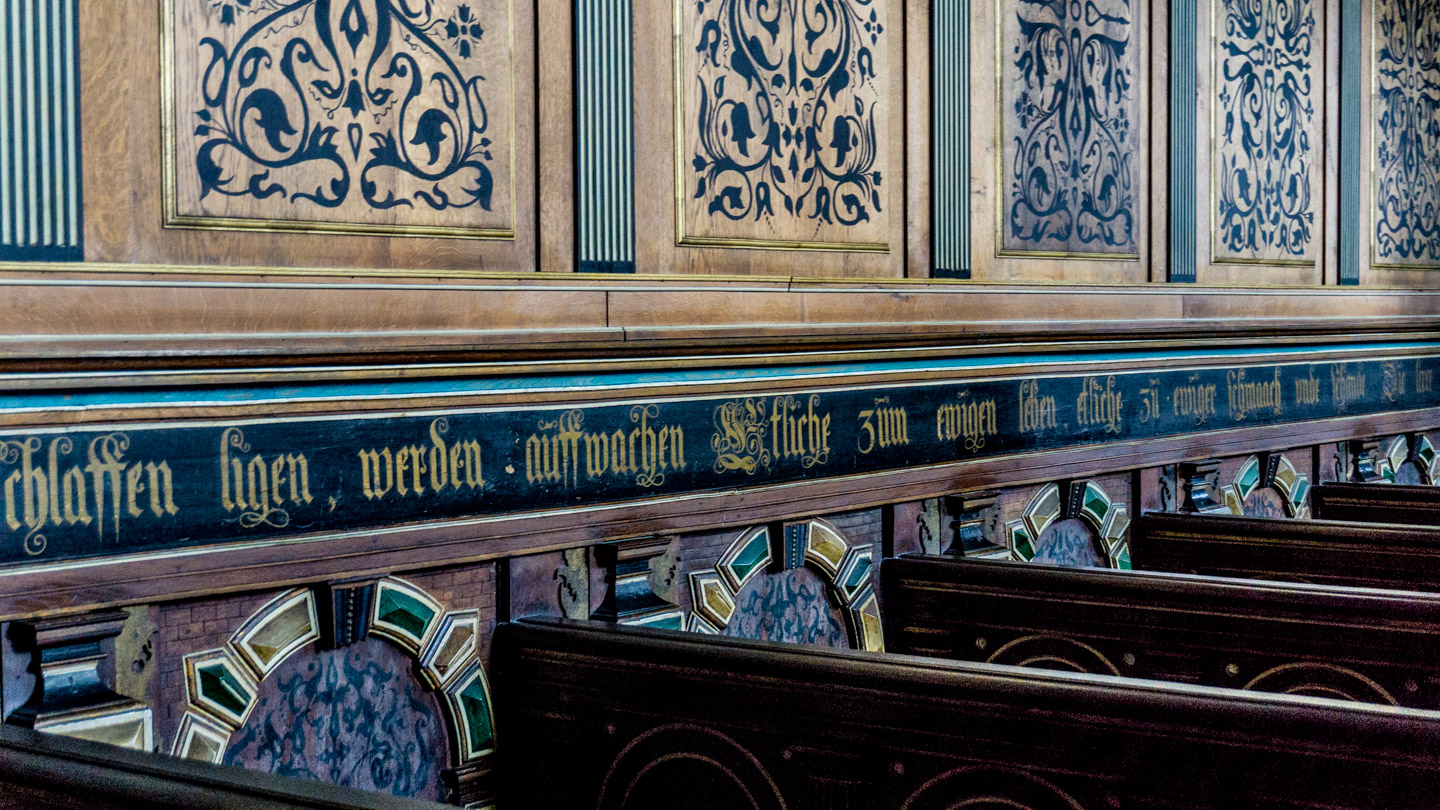
In 1785, the castle was being fitted for use as army barracks. The chapel was outfitted as a gym and fencing hall. The chapel was later refurnished with the original furniture and reinaugurated in 1843
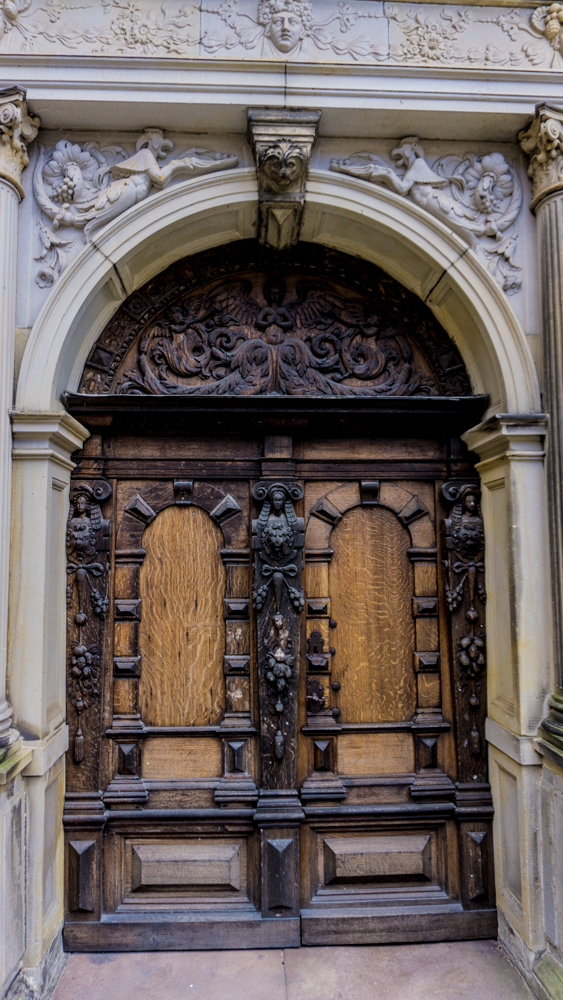
Detail of the main entrance to the chapel. 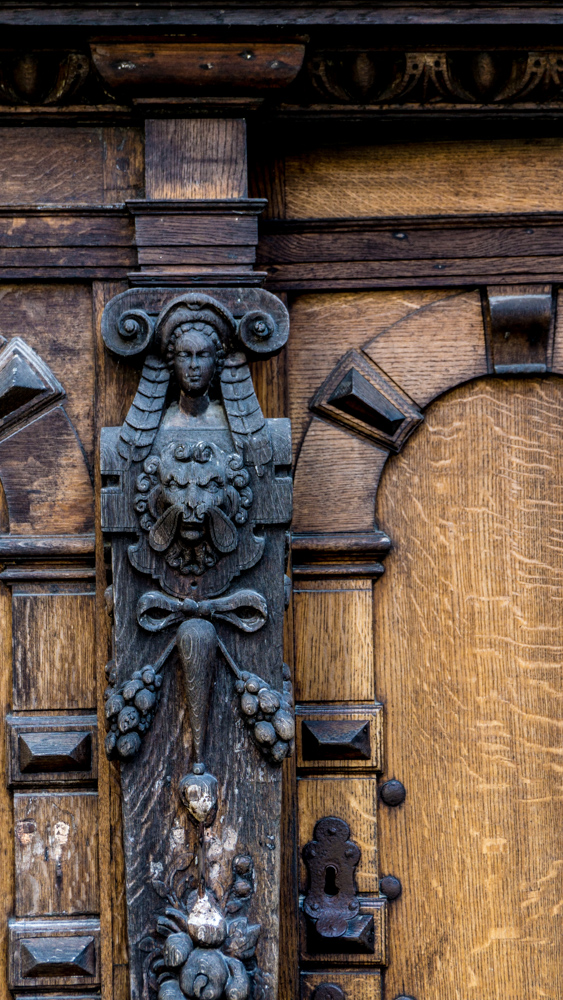 The chapel features the original pews dating back to King Frederik II.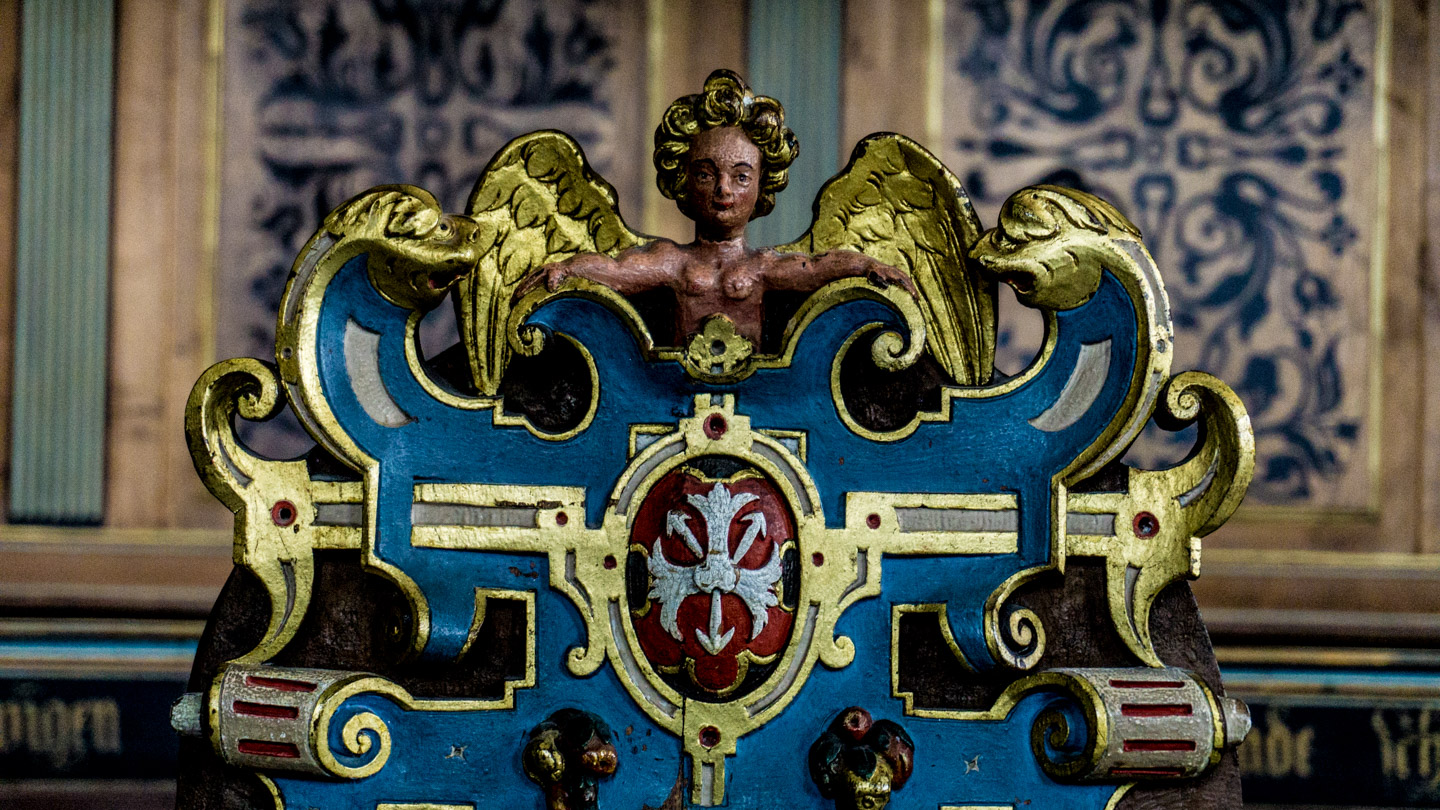
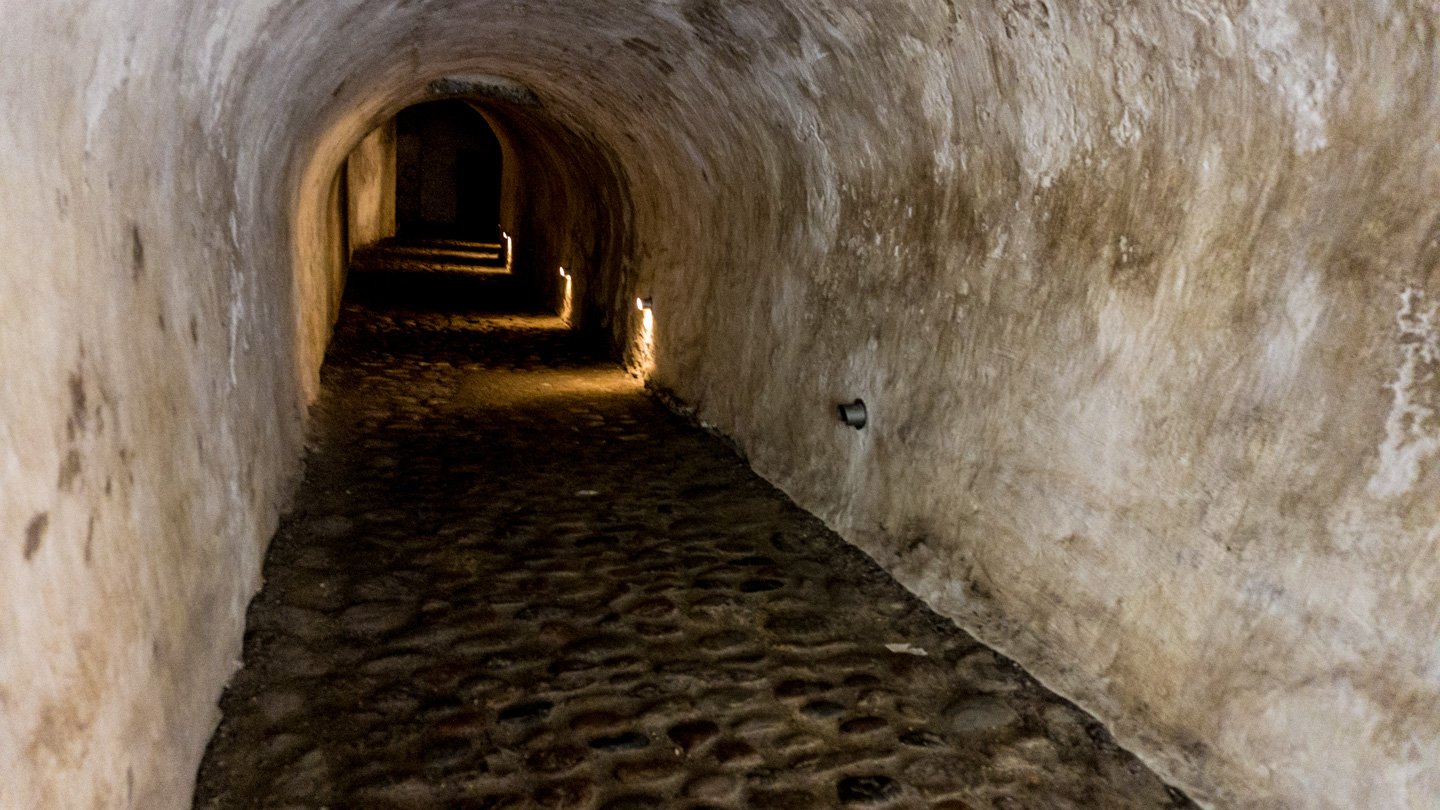
 The casements deep beneath the castle are a unique experience. Dimly lit and at times a bit treacherous, the casements are fun to explore but watch your step.
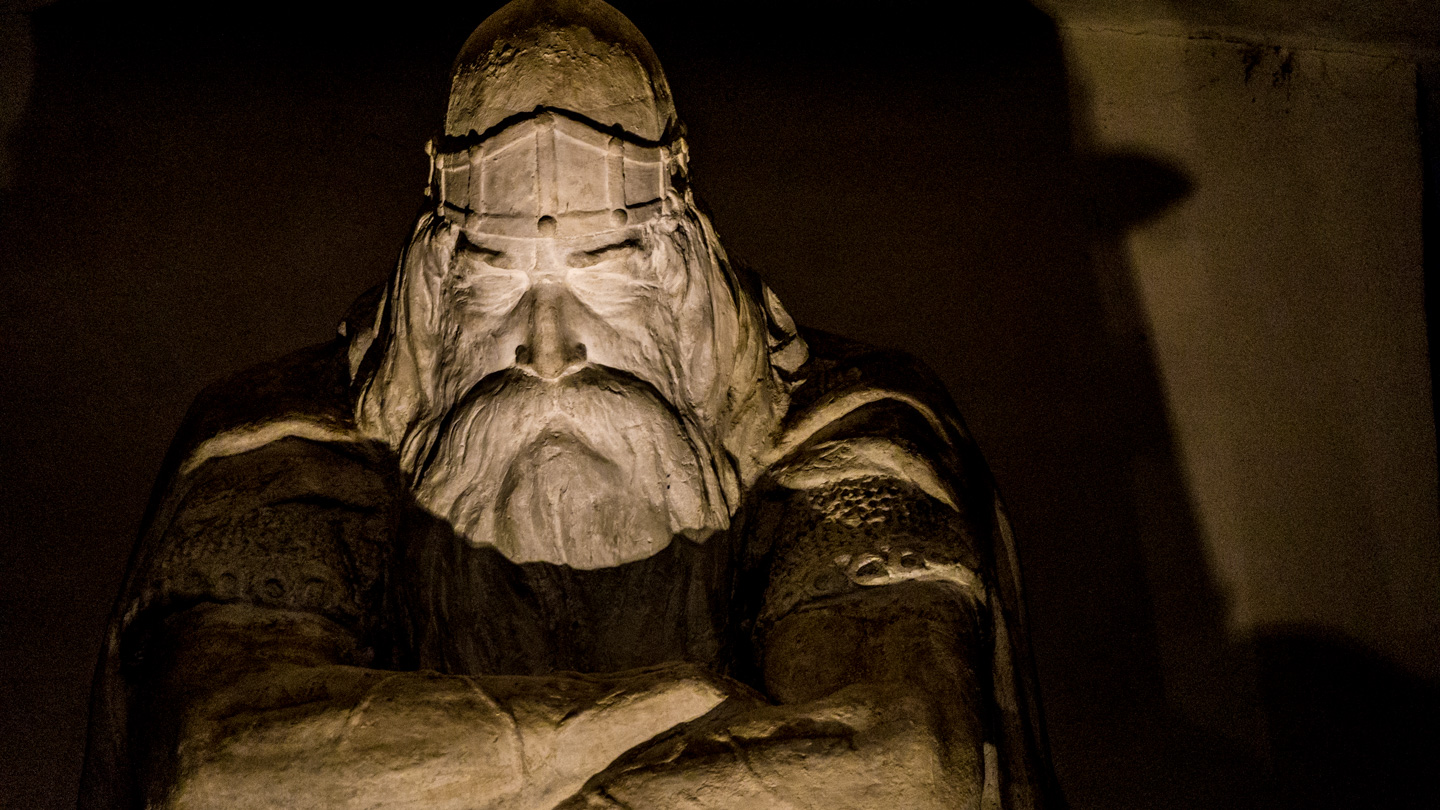
 This subterranean labyrinth is where you can meet Holger. According to the myth of King Arthur, a Danish king known as Holger the Dane, was kidnapped by the sorceress, Morgan le Fay and taken to Avalon. He escaped to rescue France from danger and then traveled to Kronborg castle. Today he sleeps until he is needed to save his homeland.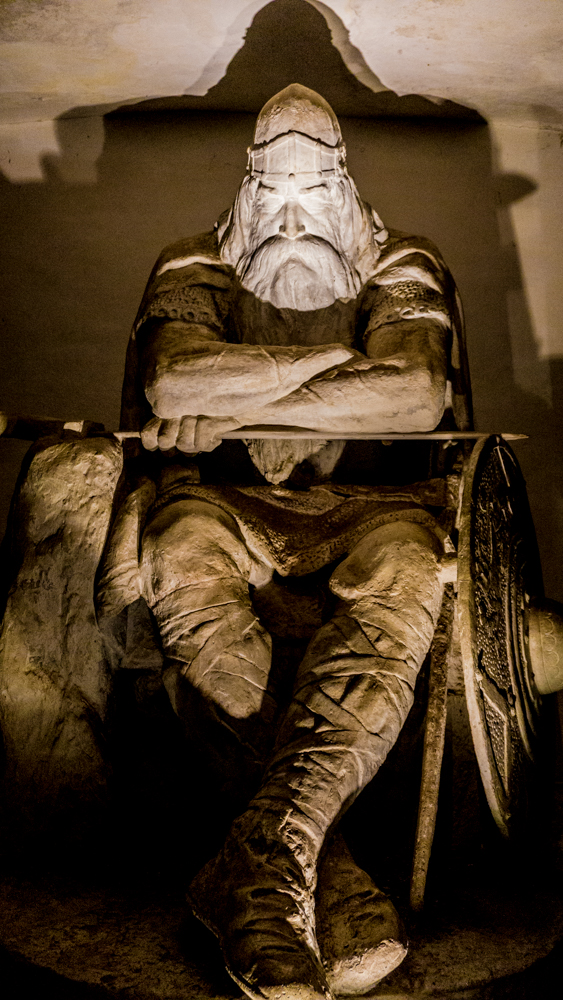
LINKS
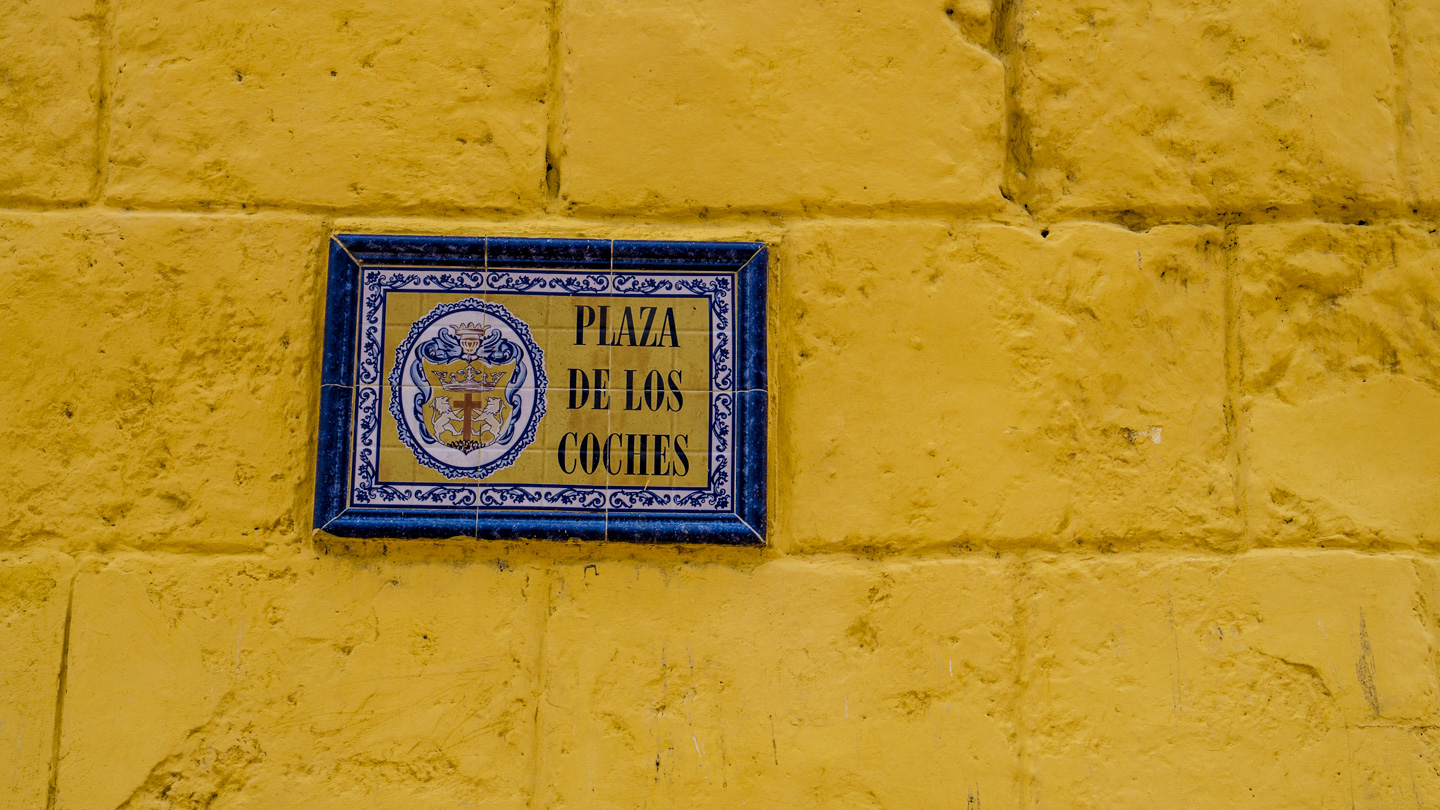
Head towards the clock tower and you will find your way to the Ciudad Vieja or Old Town. The Old Town and Ciudad Murallada, the Walled City, lie just behind. La Puerta y la Torre del Reloj is your entry into this amazing city. 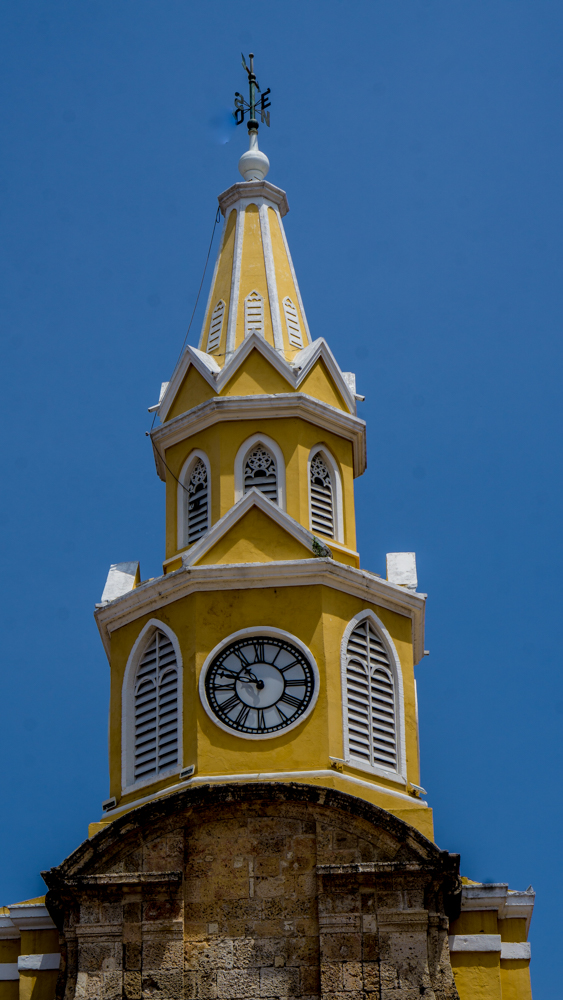 The Plaza of the Carriages (Plaza de los Cloches) next to the clock tower, was the site of the original slave market. Slaves were brought into the New World through Cartegena and Veracruz, Mexico. And yes, you can pick up a carriage ride in the Plaza de los Coches.
  If you’re on the hunt for some vintage record albums or a used copy of the South Beach Diet, this market is just for you.
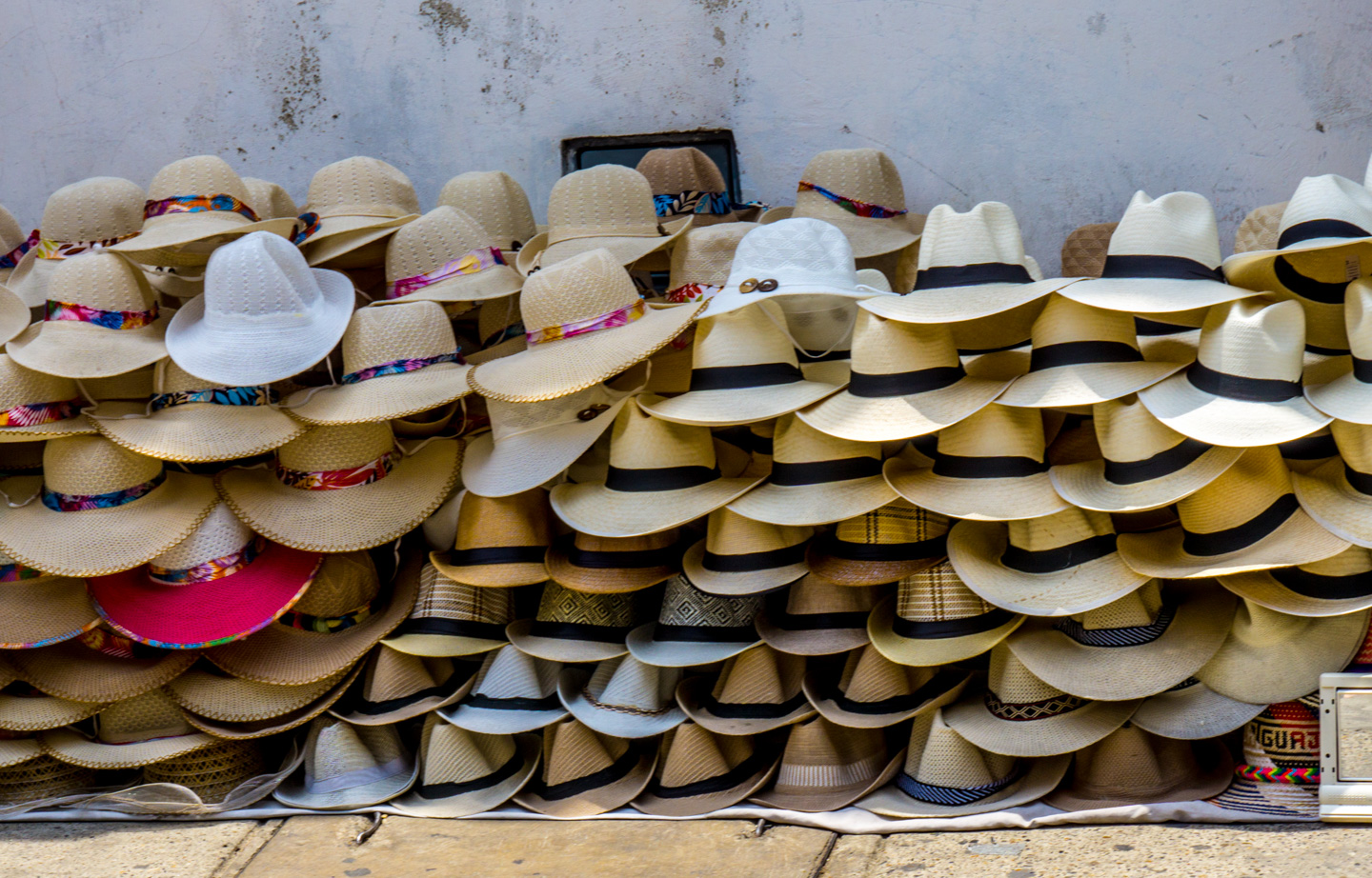
 Be sure to check out the street vendors and maybe pick up a Panama hat to keep you cool. The heat and humidity are overwhelming and most people stay away during the heat of the afternoon.
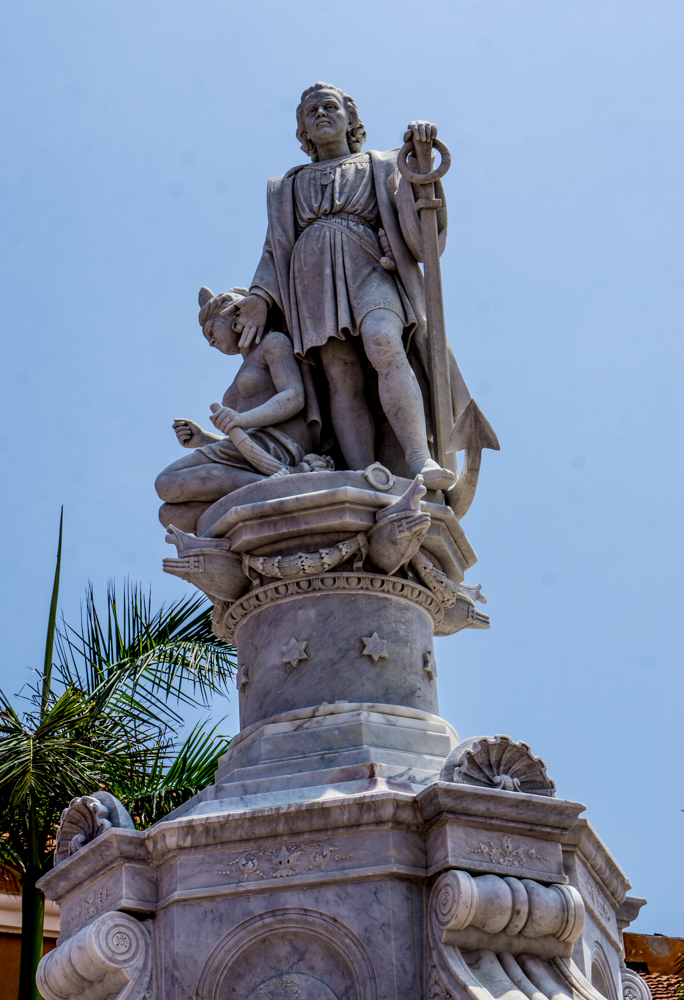
 A towering statue of Christopher Columbus stands in the Plaza de la Aruanda. Columbus explored the coast of Panama, which was part of Columbia on his fourth voyage of discovery.
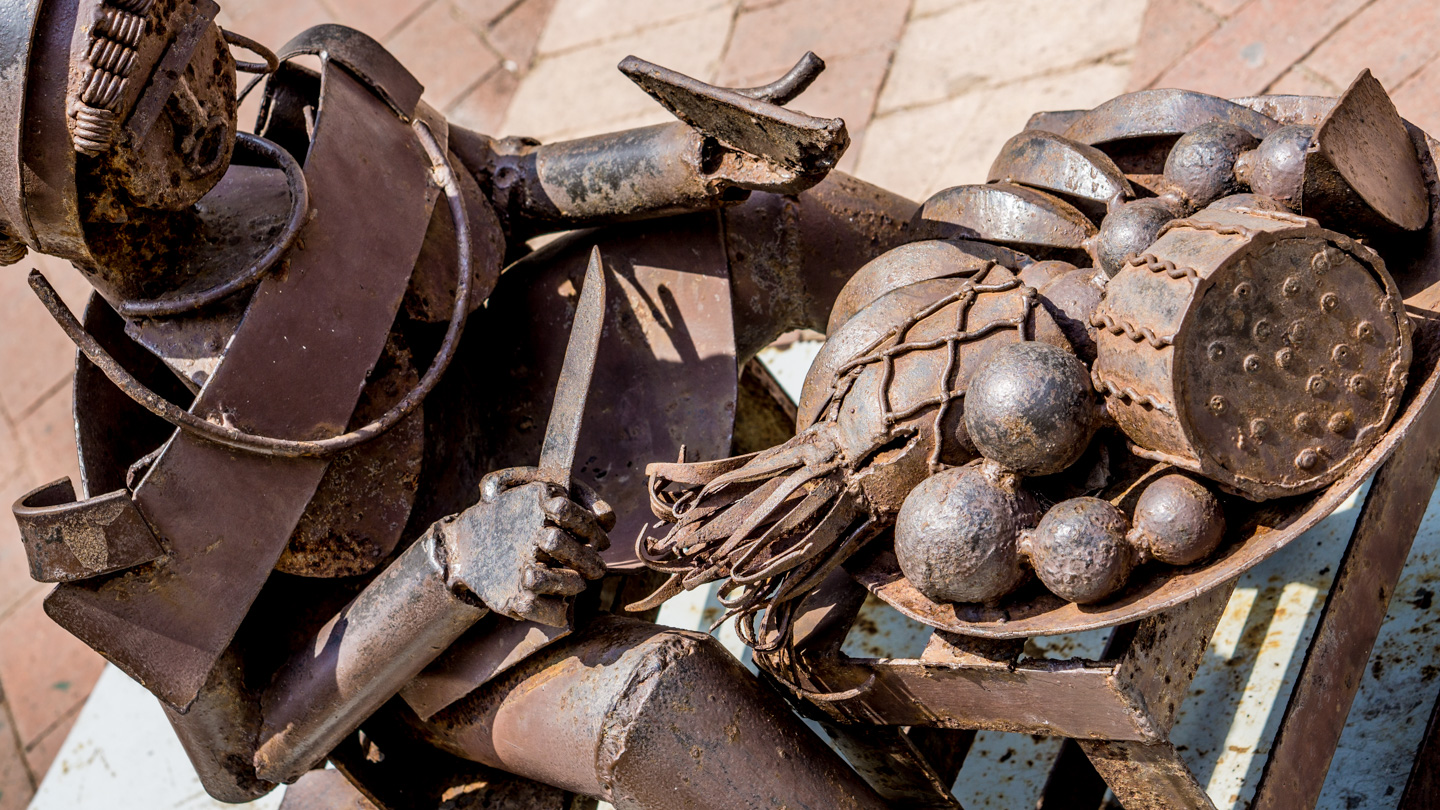
  Modern art sculptures adorn the streets and plazas. This palenquera was one of several sculptures in the Plaza San Pedro Claver.
 The Church of San Pedro Claver was built in the early 17th century. Saint Peter Claver was known as the slave of slaves by his Jesuit brethren. Unlike his brothers, Claver did not support Slavery and chose to minister to the many slaves brought through Cartegena. He would meet the slave ships before the human cargo was unloaded so that he could be the first and only friendly face they saw in the New World. San Pedro Claver was the first saint canonized in the New World.
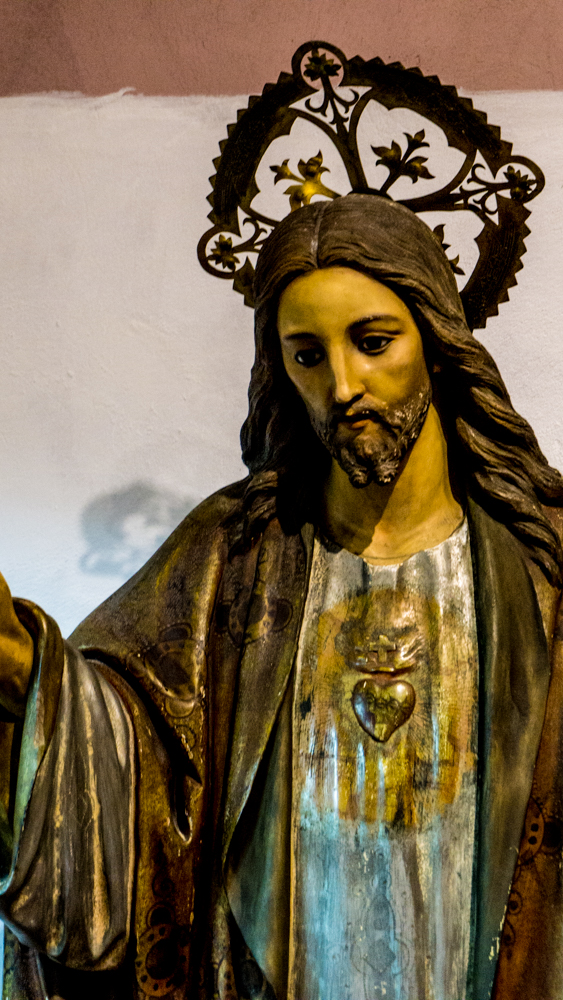
  The $5 entry fee was well worth it to get out of the hot sun for a half hour or so. The church grounds feature heavy wood furniture offset by the gleaming white washed walls.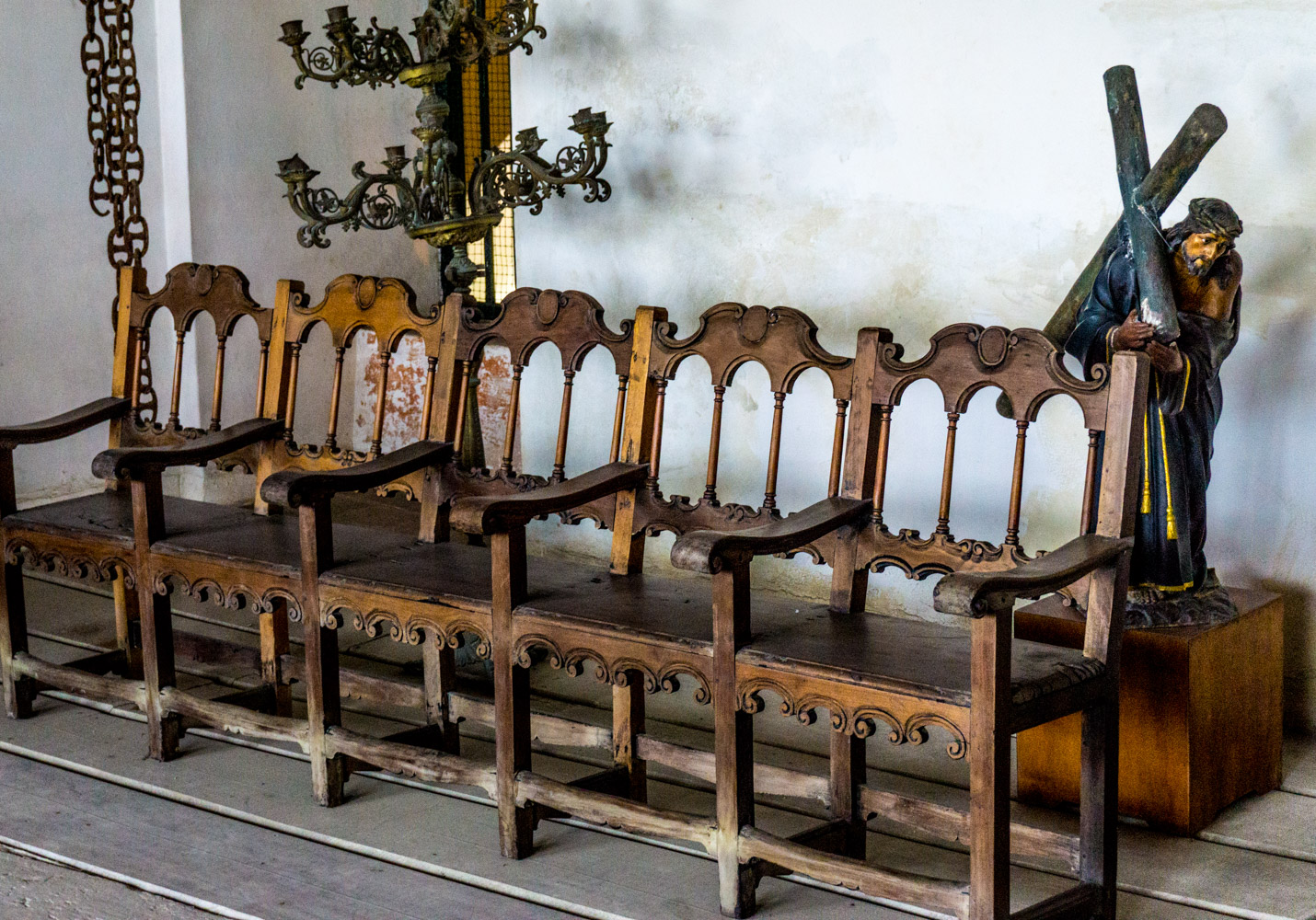
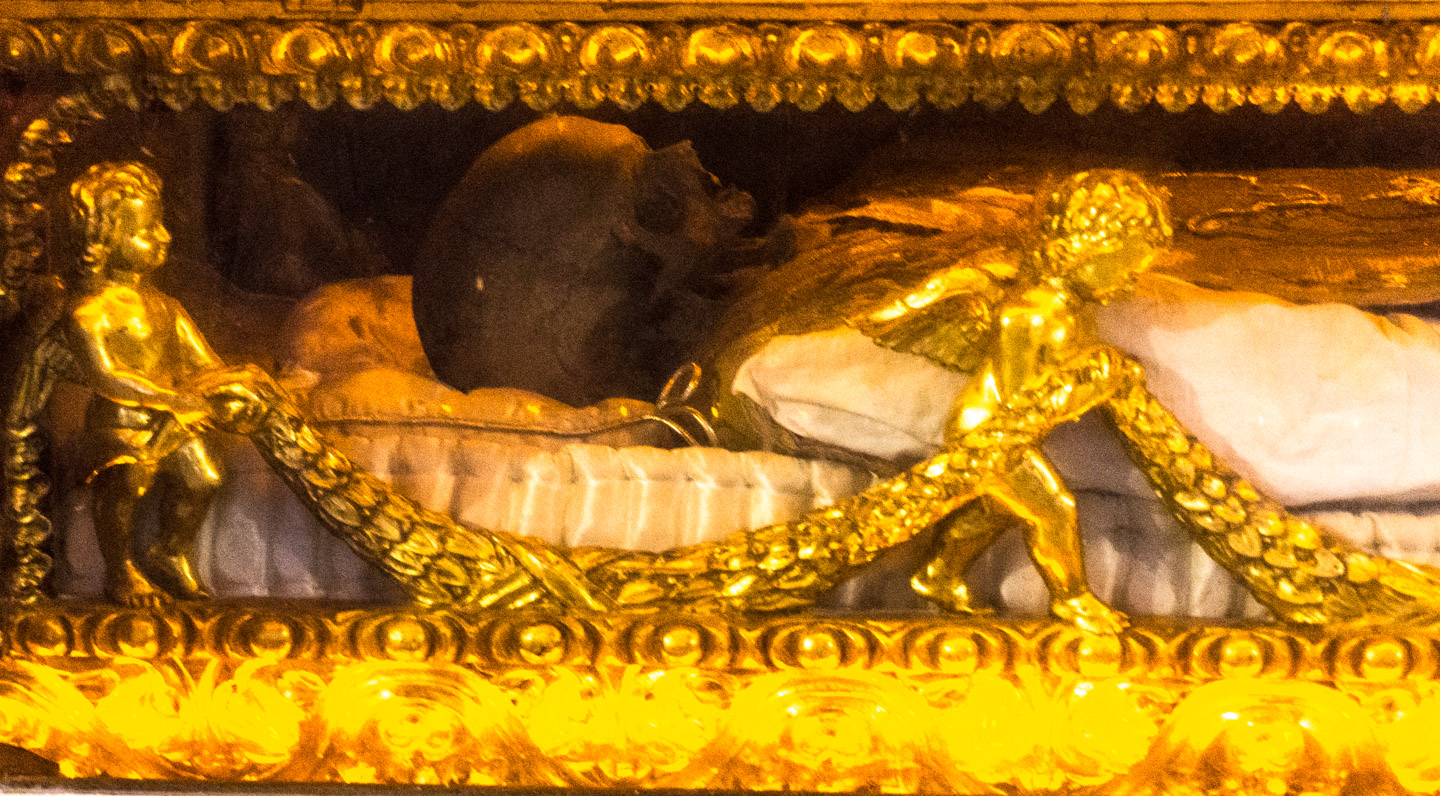
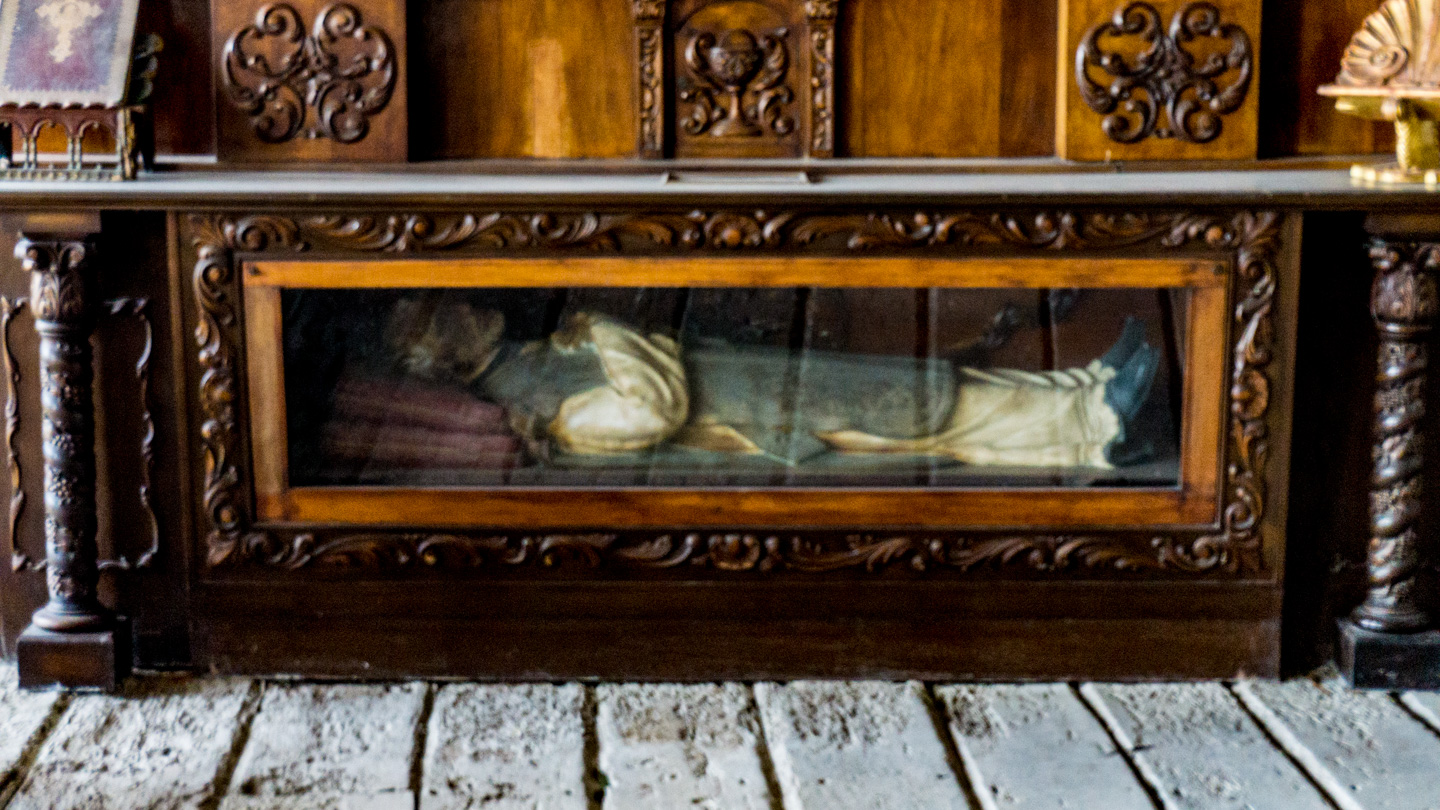 The altar is dedicated to San Pedro and his remains are visible underneath. You can check out his skull if you want to get up close and personal.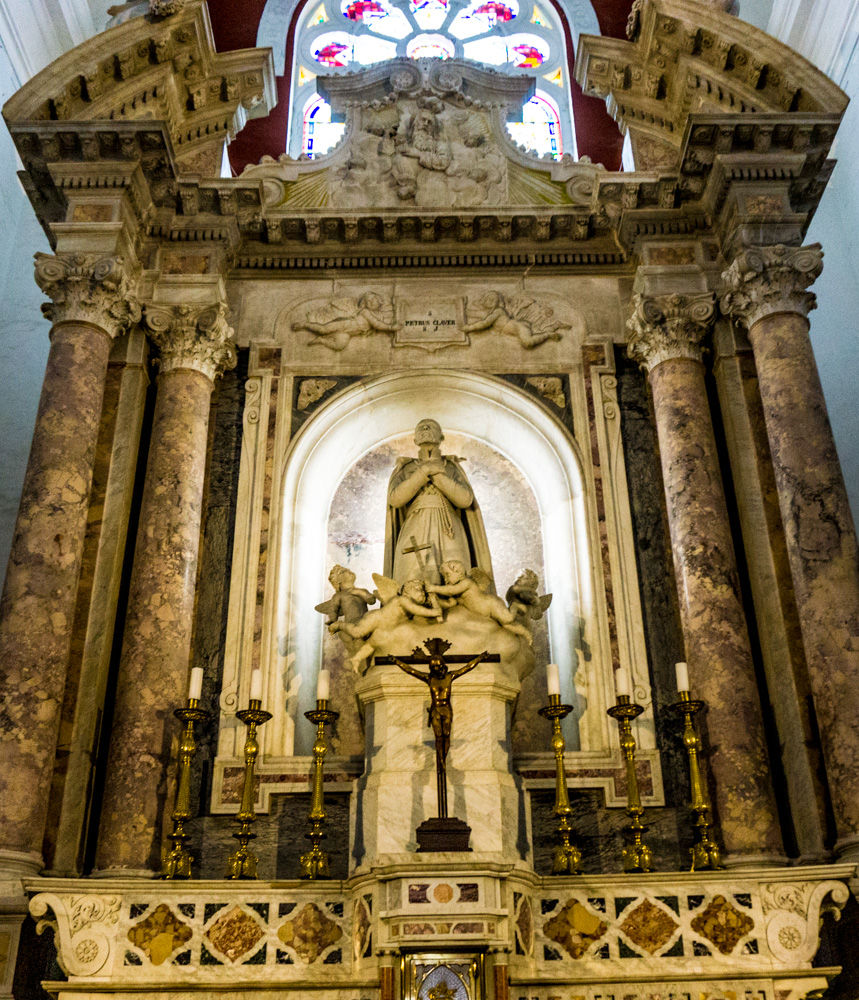
 The mausoleum in the back of the cloister houses more recent parishioners.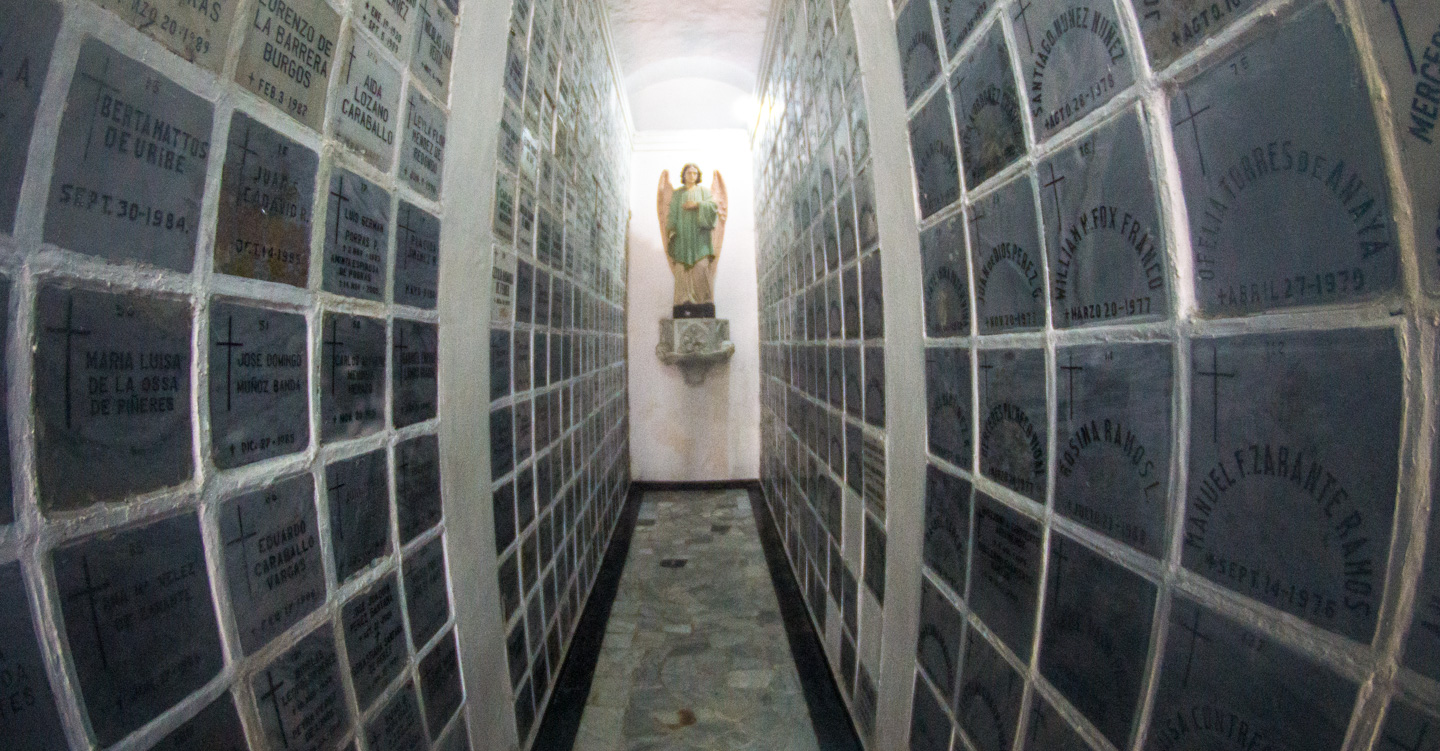
LINKS:
The capital of Estonia, Tallin is becoming a popular cruise ship port on the Baltic Sea. Tallin’s old town is one of the best preserved medieval cities in Europe. The earliest traces of human occupation go back to 5000 BC. Unlike neighboring towns, Tallin has never been razed and pillaged.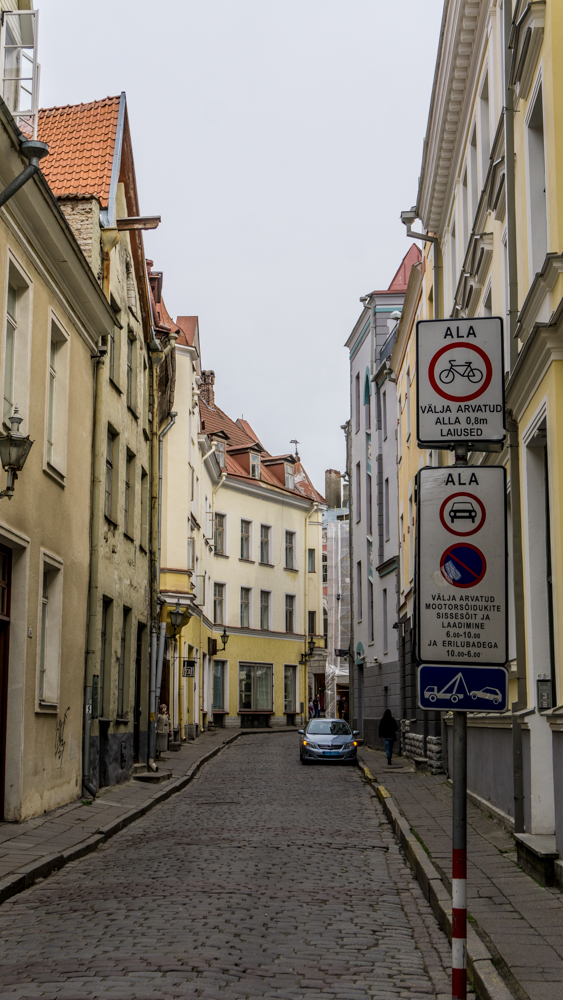 Toompea, the upper town is where you can visit Alexander Nevsky Cathedral. During the period when Tallin was under the control of the USSR, the cathedral was much hated by the people. They saw it as a symbol of oppression and in 1924 the authorities scehduled the cathedral for demolition. Unfortunately a lack of funds caused the project to be abandoned.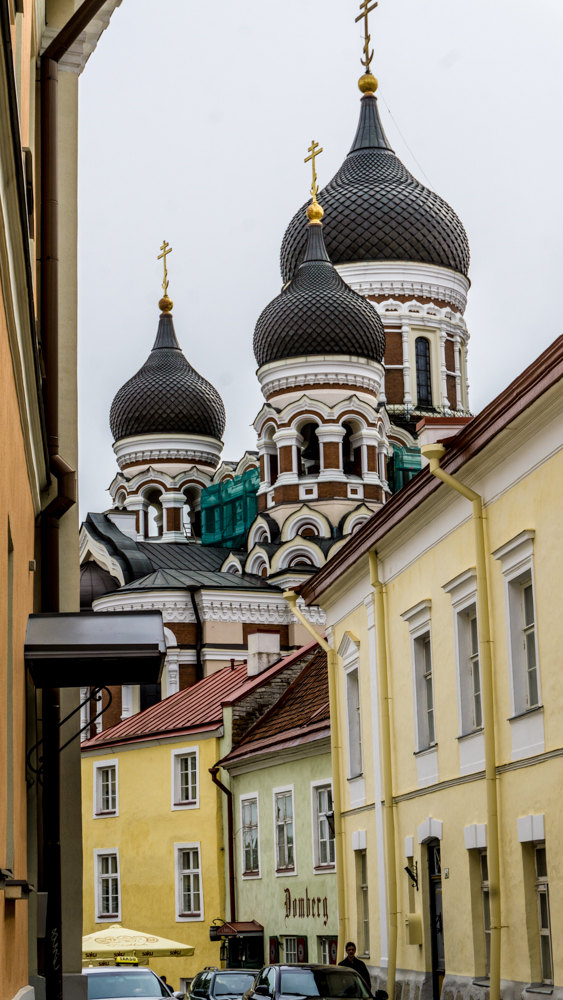
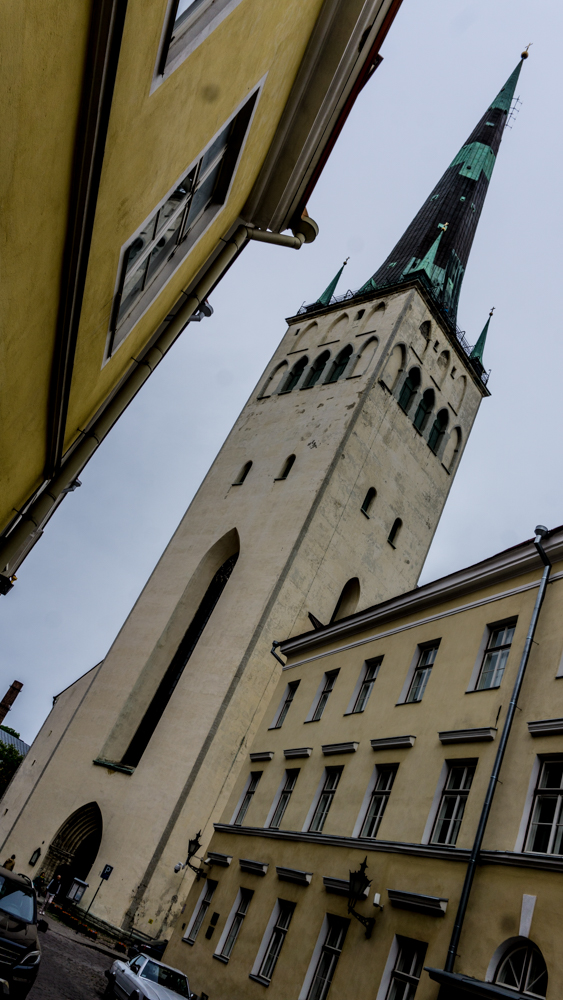
 Between 1549 and 1625, St. Olaf’s Church may have been the tallest building in the world. Up until 1991, the KGB used the church’s spire as a radio tower and surveillance point.
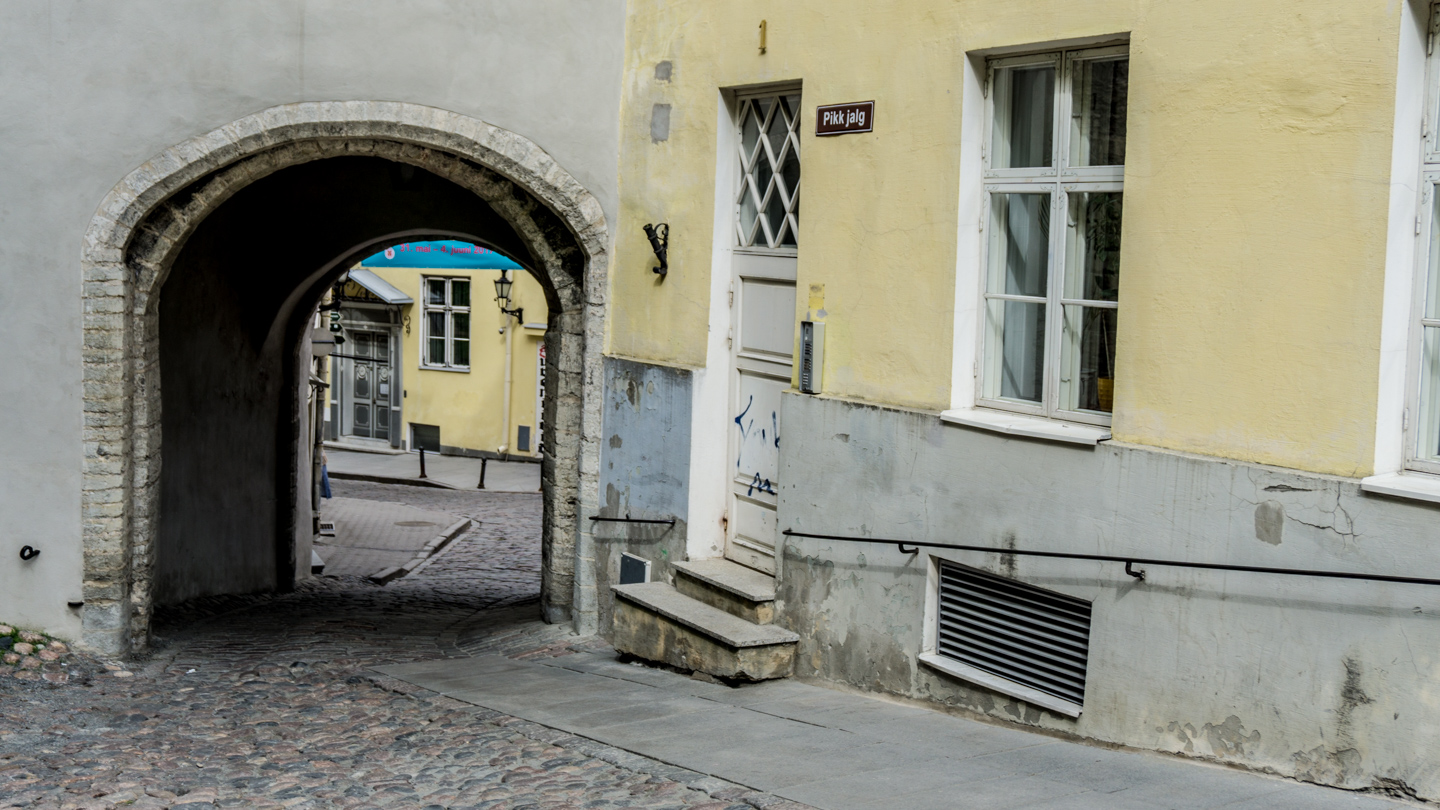
 Colorful buildings and twisting cobblestone streets are made to wander through.
  Local artists set up their masterpieces along the old city walls.
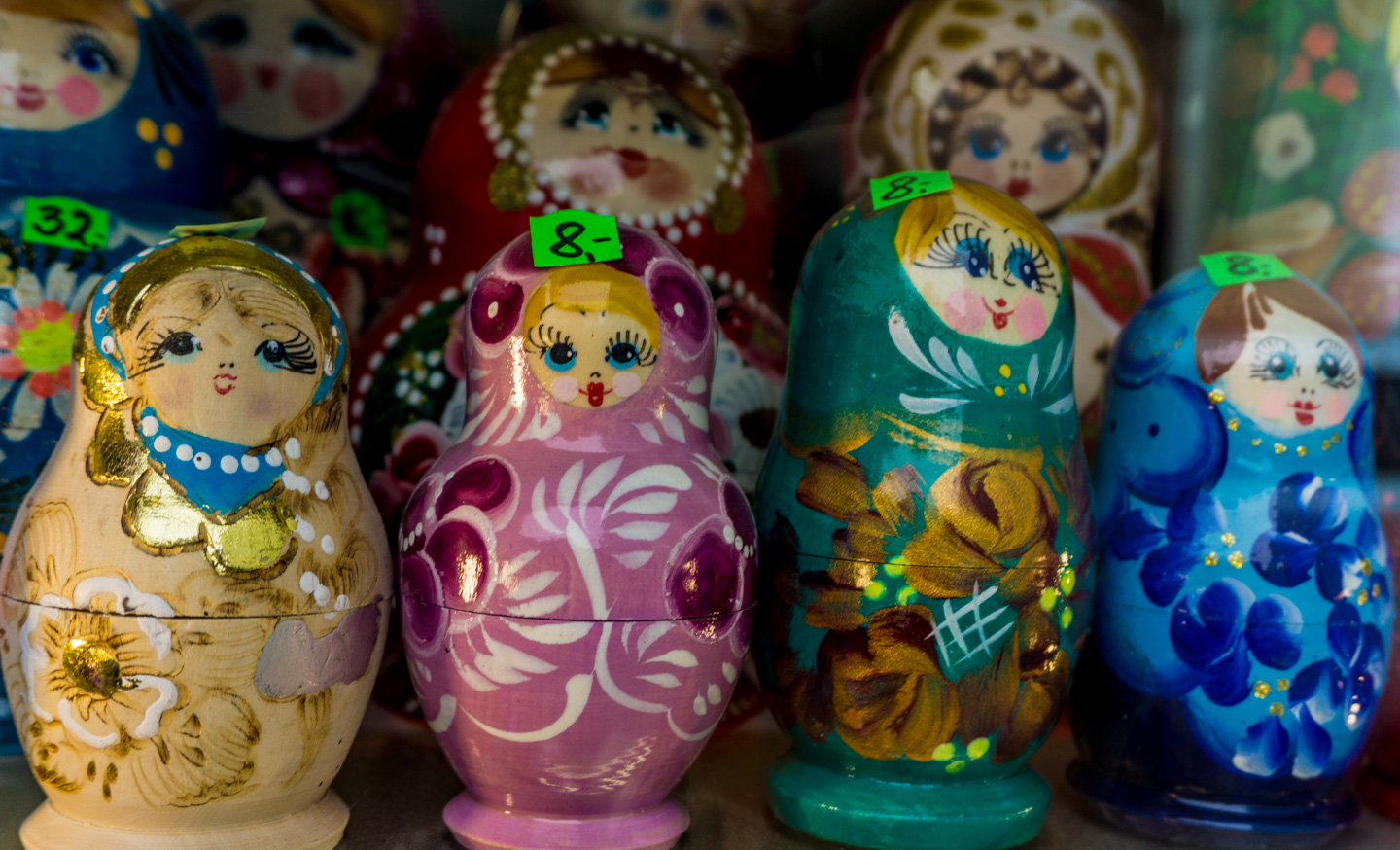
 Russian nesting dolls known as matryoshka are available for sale in many shops.
  Knitting played an important part in Estonia’s history, so much so that it wasn’t uncommon for hundreds of mittens to be knitted as gifts for wedding guests.
 There is something magical about the brightly decorated doors along Tallin’s city streets. Bright colors, metal and wooden embellishments turn each into it’s own work of art.


LINK
Stavanger Cathedral is the oldest church in Norway that is still in use. Construction began on the church in 1123 by a Benedictine Monk named Bishop Reginald from Winchester in England. 
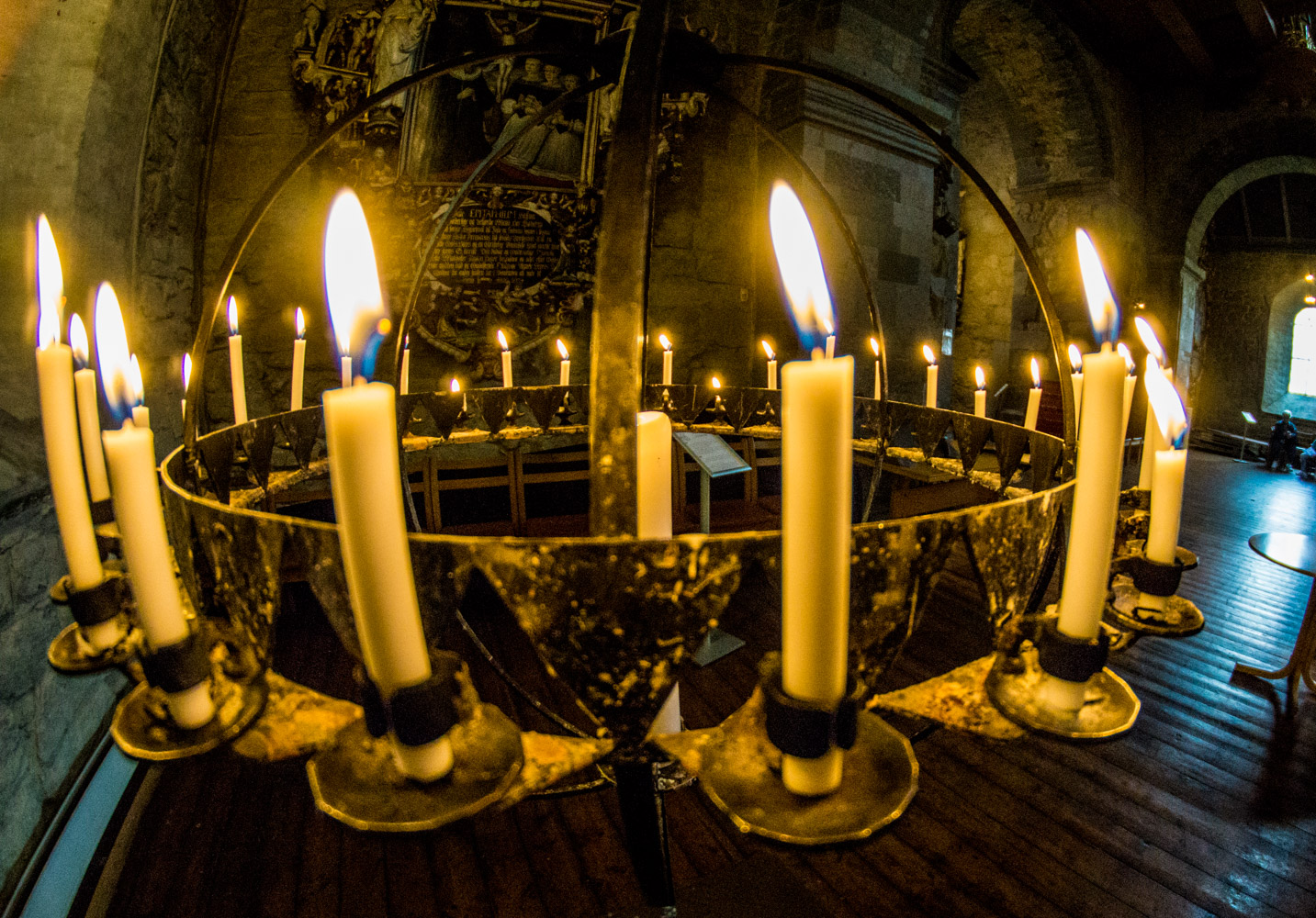
 In medieval times the church was quite different than it is today. Around the church interior were different altars dedicated to different saints. Daily masses were held around these altars. The St. Swithun relic, an arm bone from an English bishop could be found in the choir. The cathedral also had several relics during this time, these included a cloth with Jesus’ blood, a piece of Jesus’ cross and other relics connected to different saints.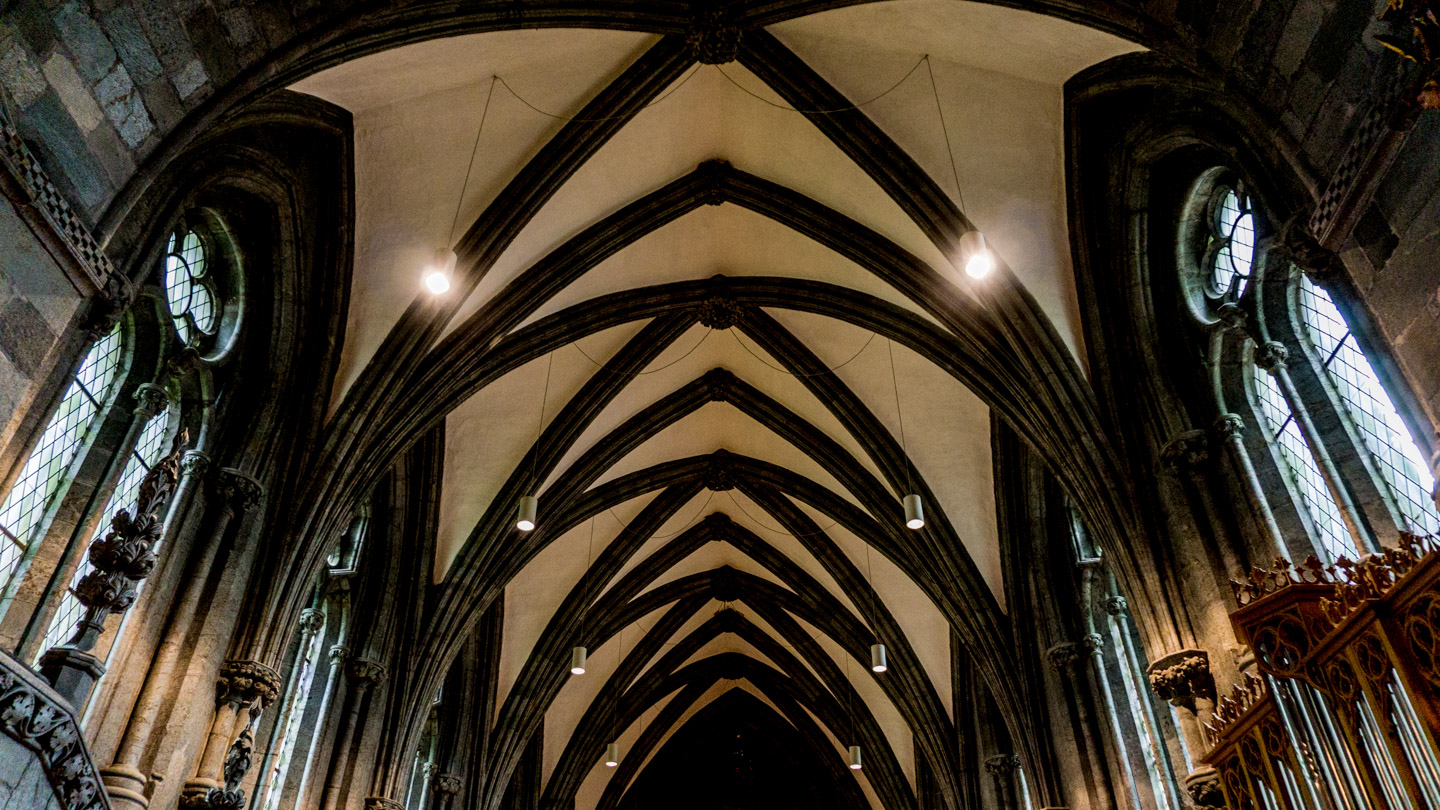
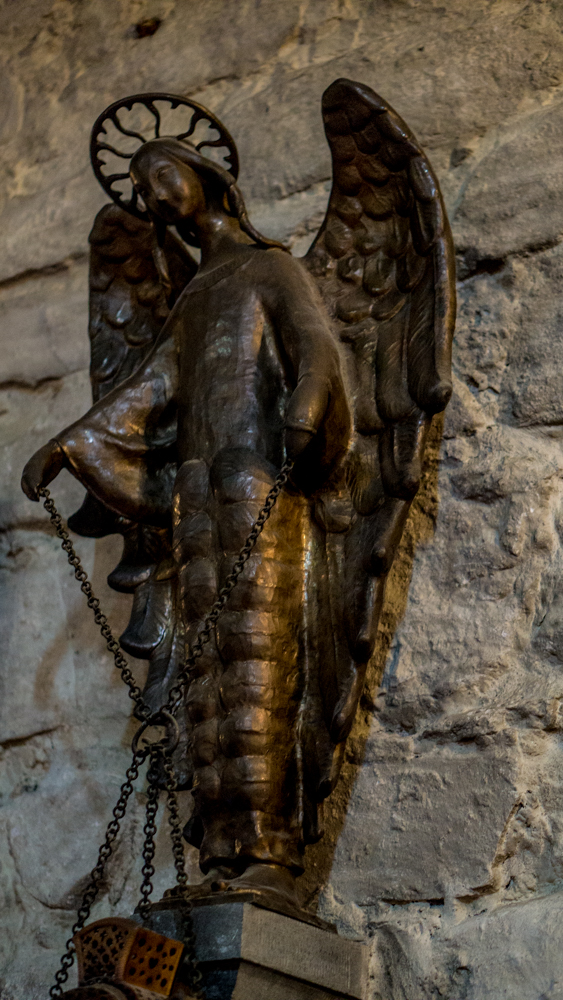
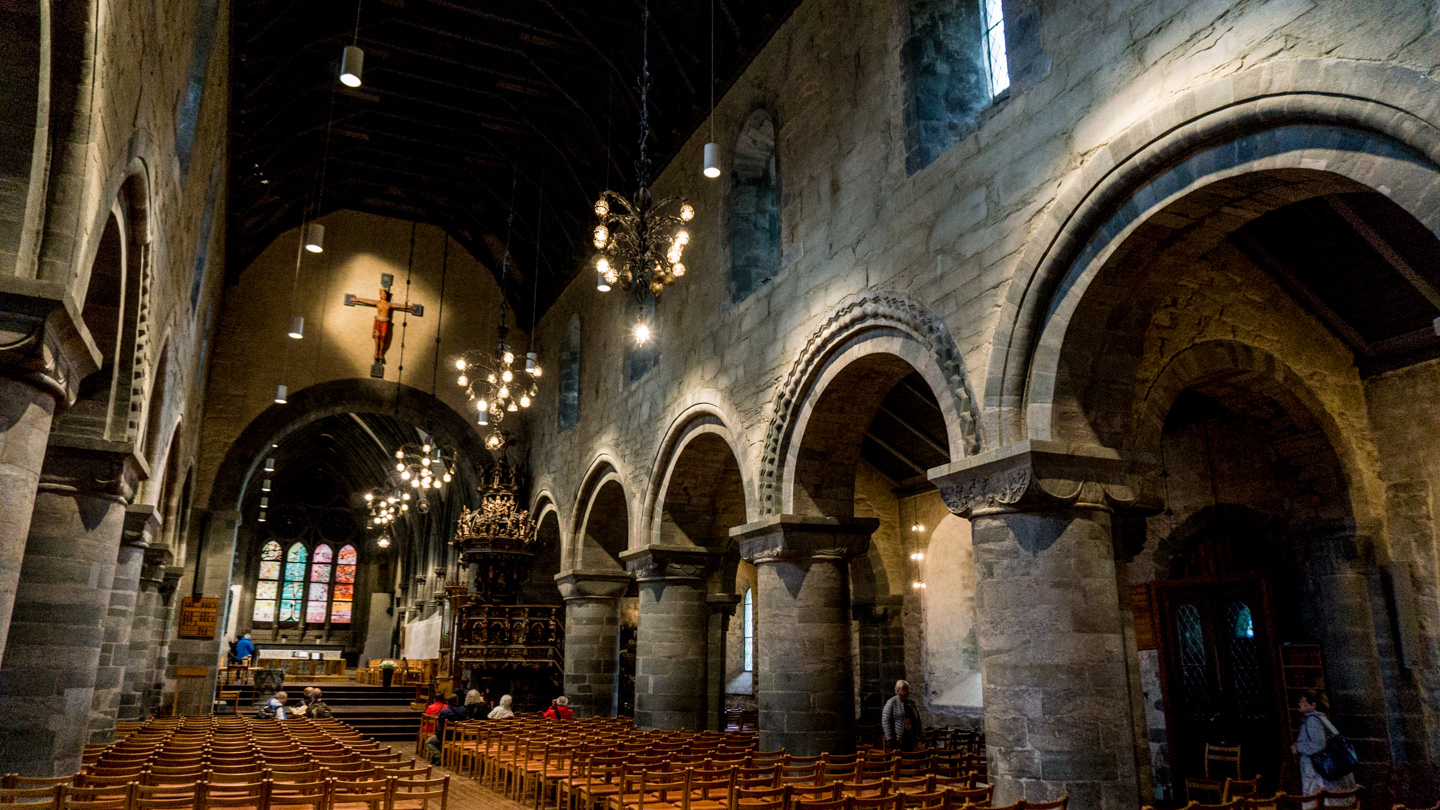 New lighting for the cathedral was installed in the 1920’s. Emanuel Vigeland designed six chandeliers in the nave and eight lamps on the side walls. The lamps were designed with an angel figurine that holds a hanging lamp.
 The chandeliers look like thorn bushes and vines.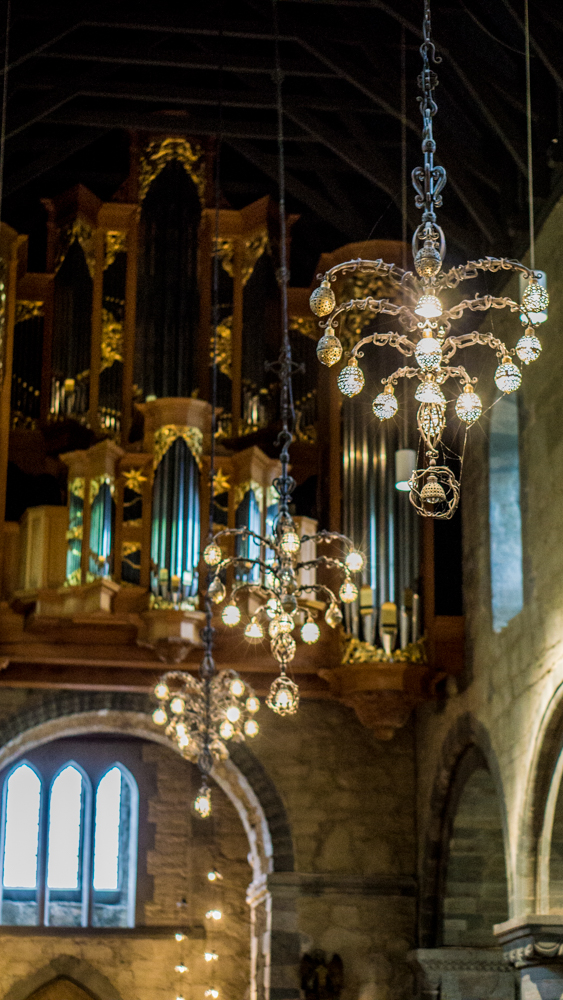
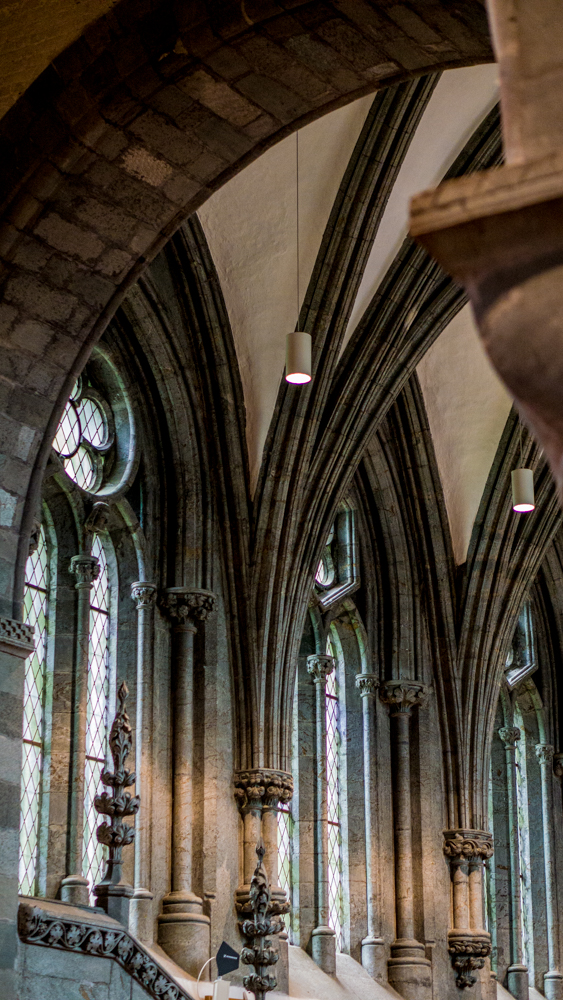
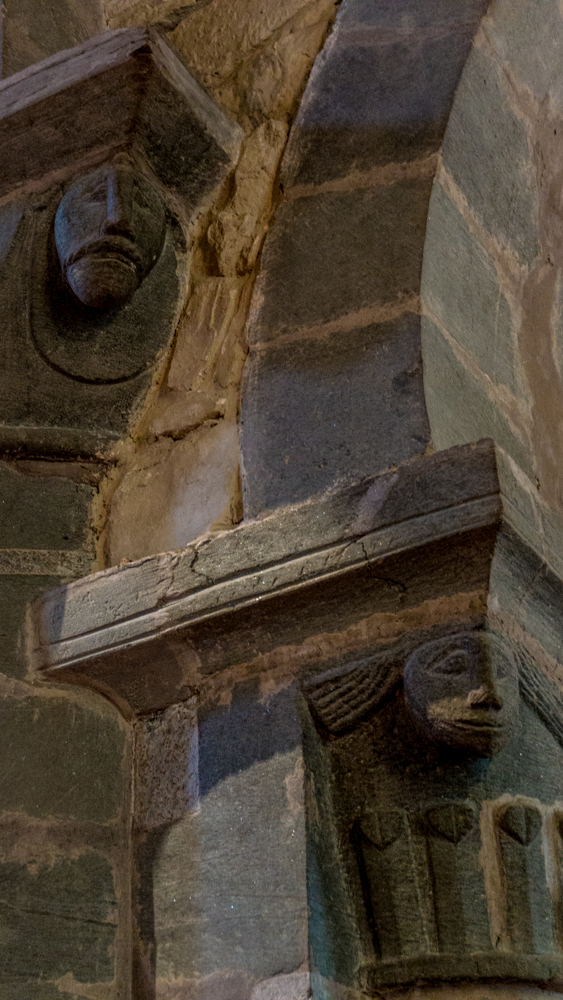
 Faces in the Medieval portion of the church reflect the Norse heritage of the craftsmen.
 The ornate pulpit was a gift from the feudal overlord Henrik Below, in 1658, created by Scottish sculptor Andrew (Anders) Smith. As one of the biggest pieces in Norwegian baroque style the pulpit is an example of cartilage baroque. The base of the pulpit is the biblical character of Samson facing down a lion.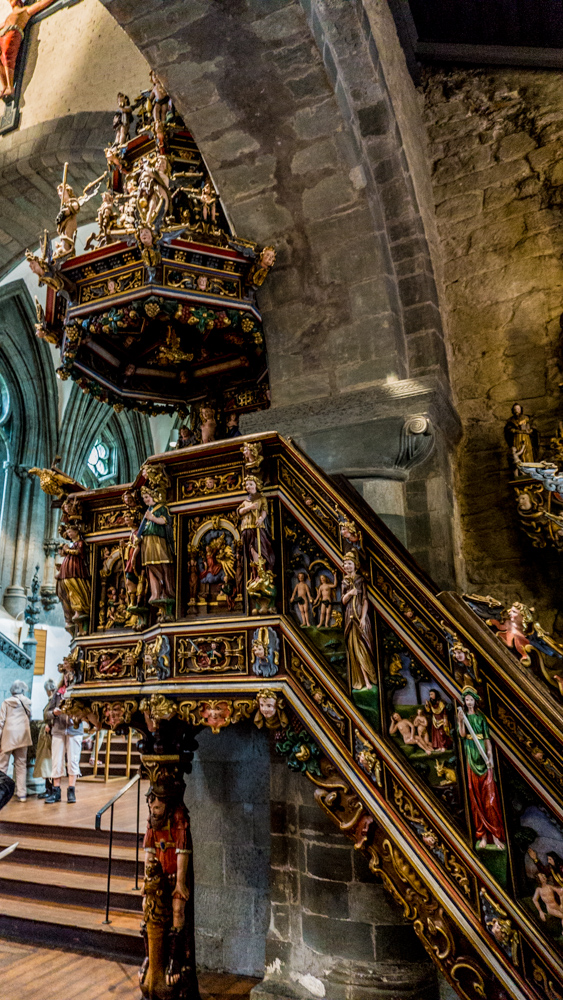
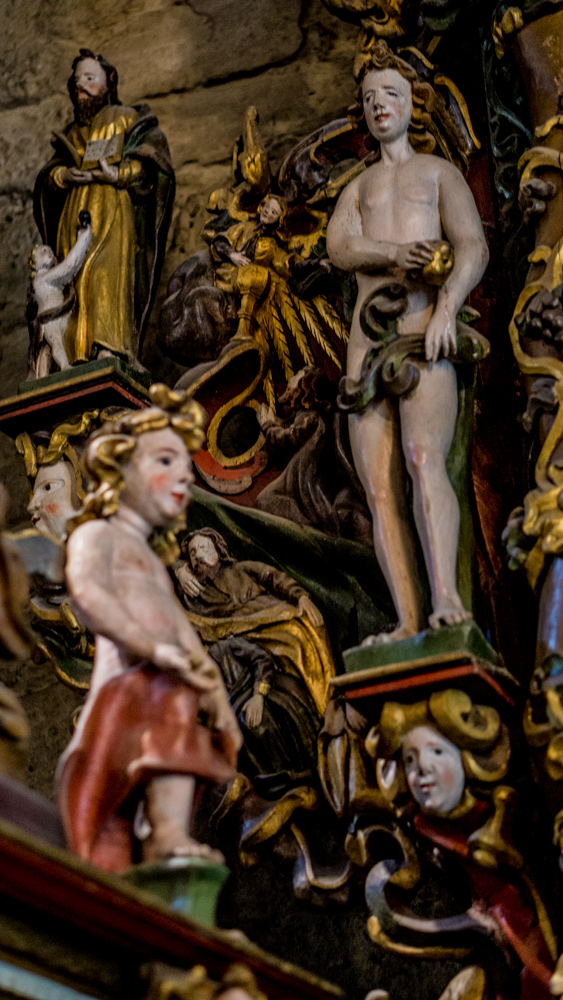
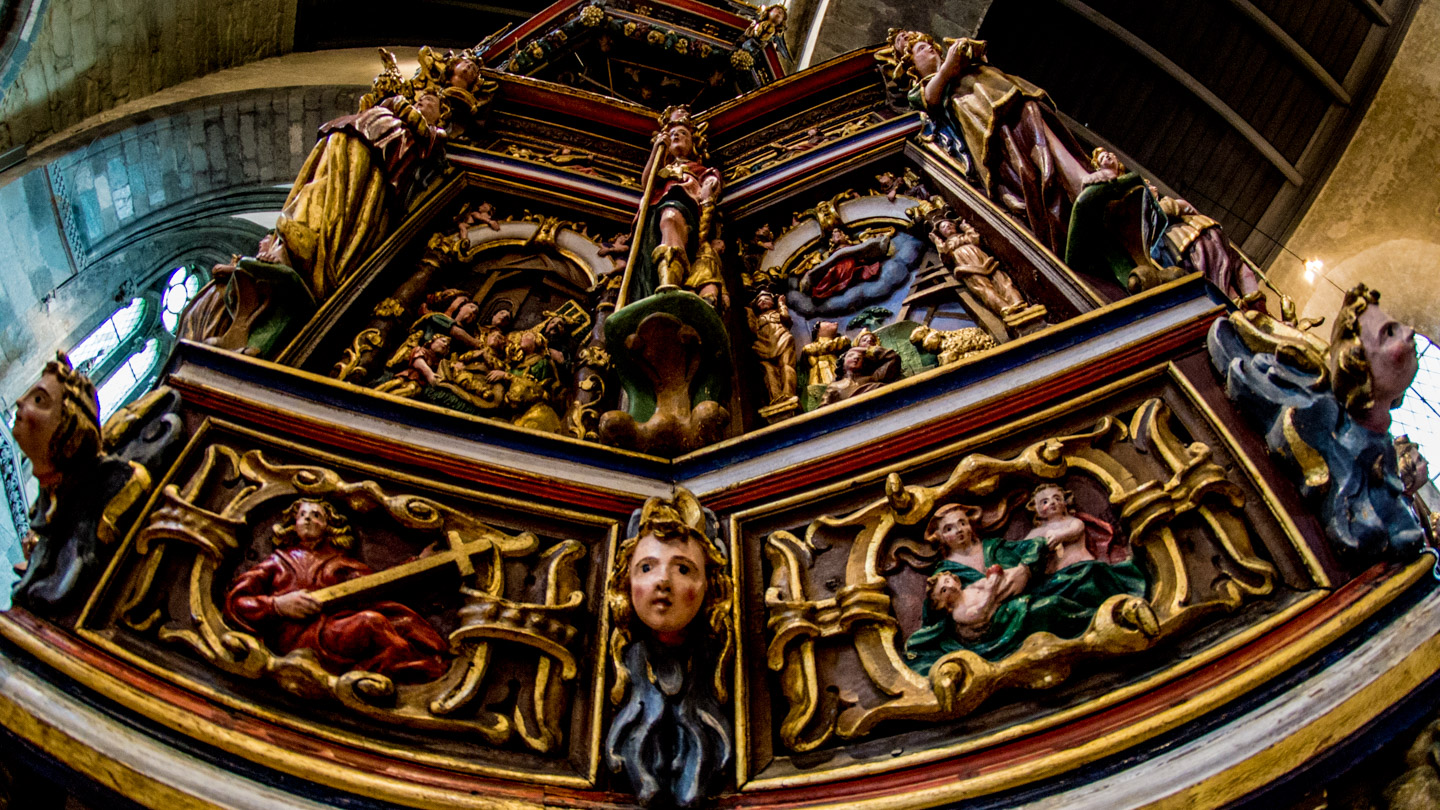 The various carvings display stories of the bible starting with the Garden of Eden towards the bottom and ending with a triumphant Jesus at the top.Since many people at the time couldn’t read, the carvings were used to tell the tales.
 Five large and elaborately carved memorial plaques are epitaphs for known men in the community. Their hanging in the cathedral brought honor to their families. Many rich and powerful families wanted to mark their position and make their presence known within the church. These families often received preferred seats in the front rows. This practice was popular in the 1600 and 1700’s.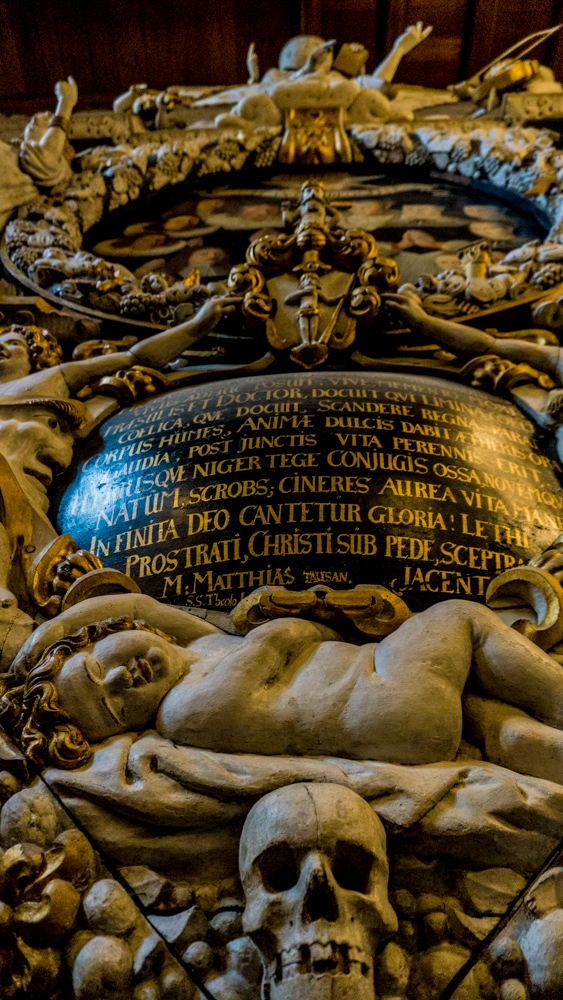
LINKS
The Frederik’s Church’s green copper dome can be seen over the city of Copenhagen. Also known as The Marble Church or Marmokirken, began construction in 1749. The victim of budget cuts, the church stood in ruin until 150 years later when it was finished. If you plan to visit be sure to have some Danish Krone in your pocket as they don’t accept credit cards.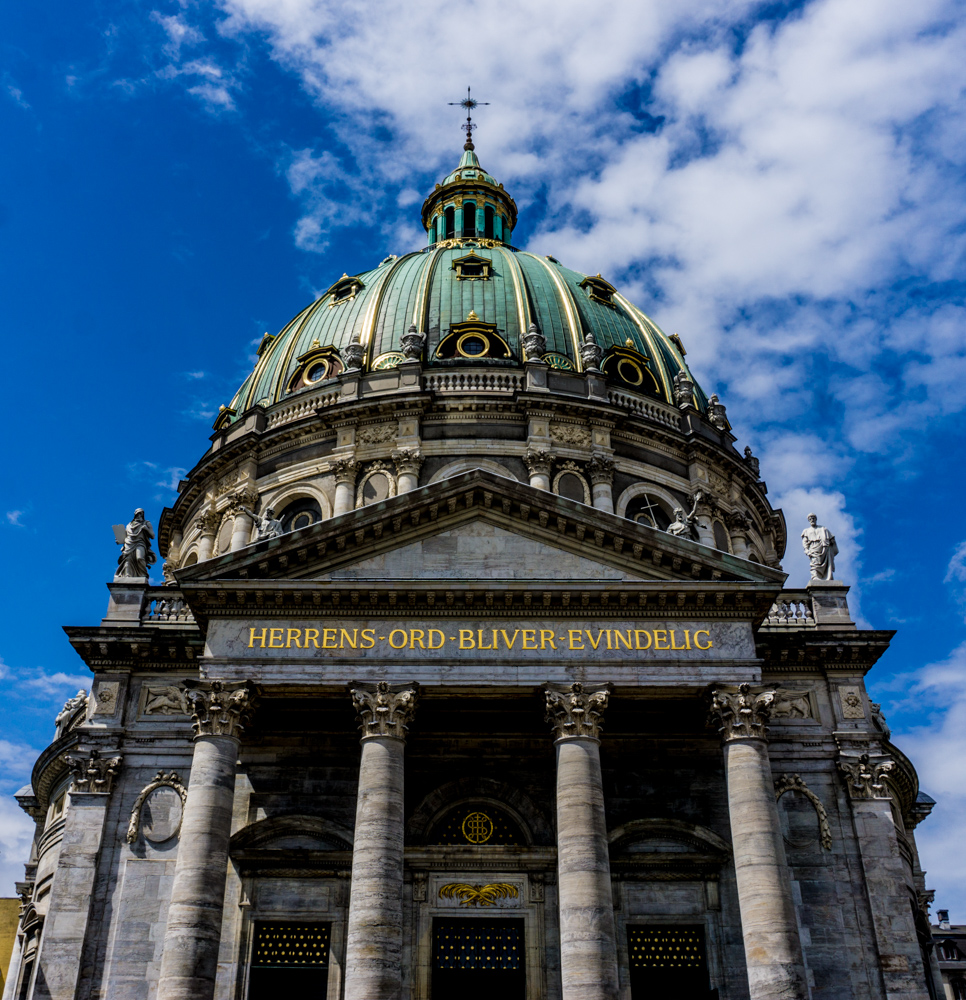 The gold lettering over the entrance portico HERRENS ORD BLIVER EVINDELIG translates to “the word of the Lord endureth for ever.” – 1 Peter 1:25
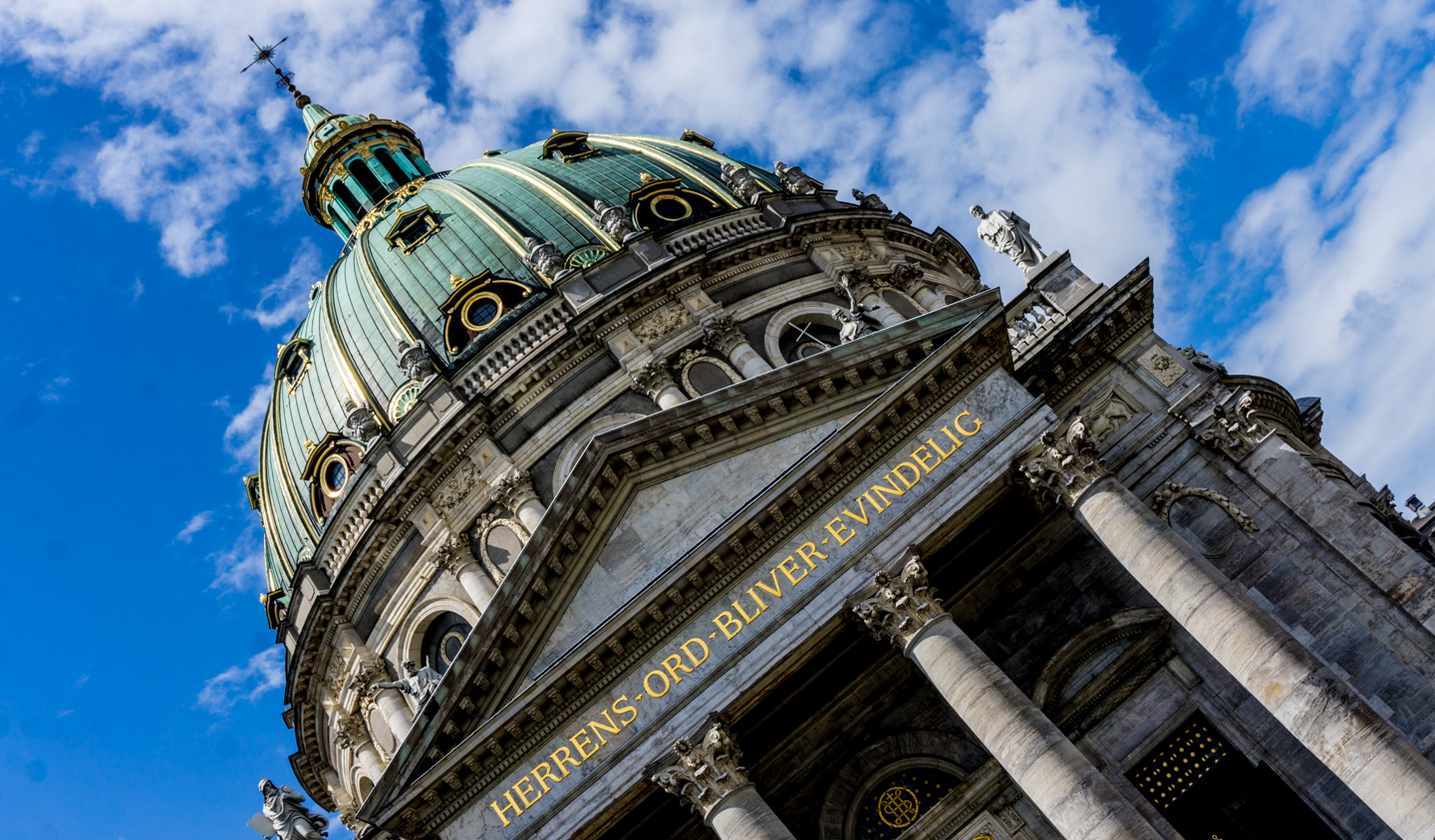 Some say the large dome was meant to rival St.Peter’s in Rome. It remains the largest dome in Scandinavia and one of the largest in Northern Europe.
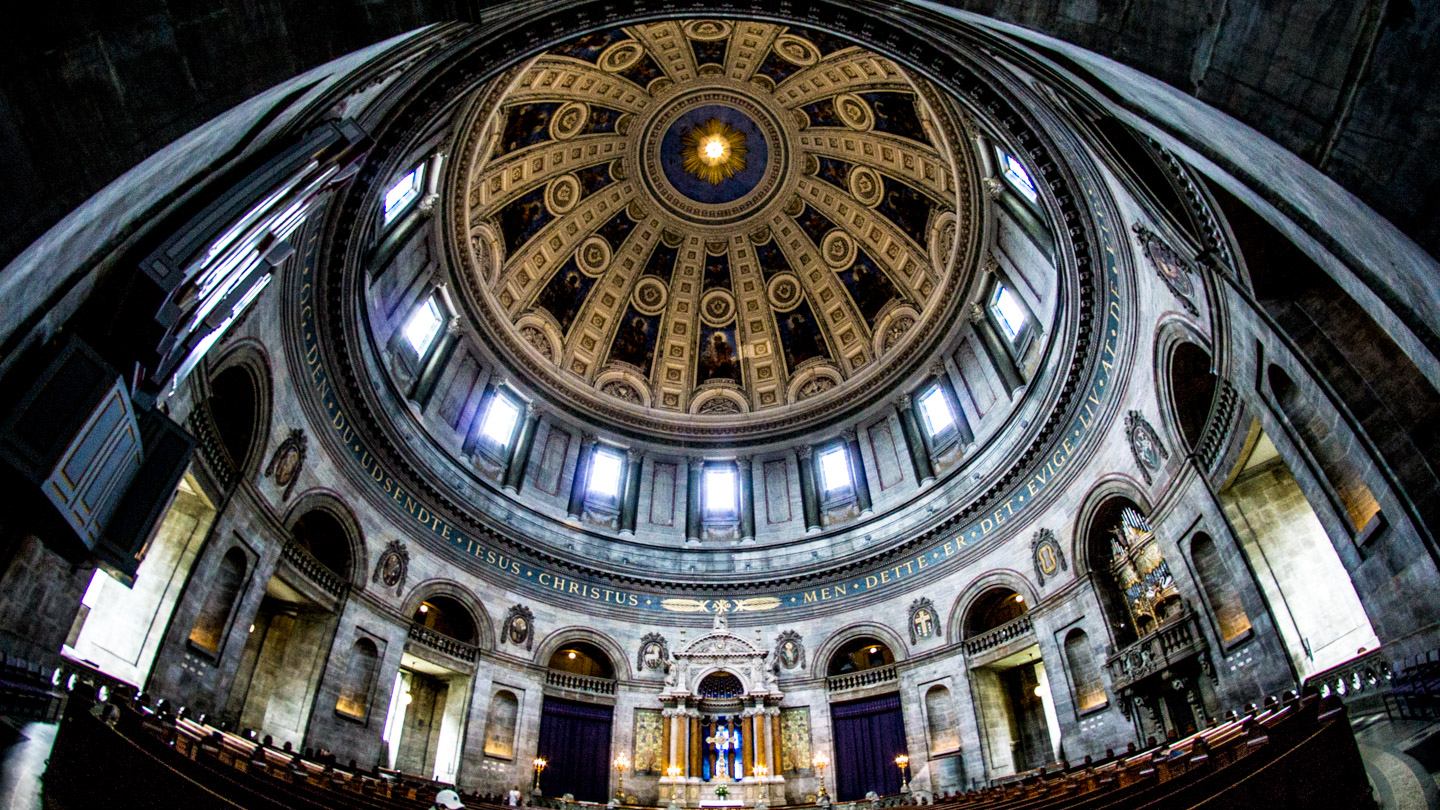 The ornate Swan Organ is no longer in use. The swan is Denmark’s official bird.

 The inner dome of the church is resting on 12 columns. The cupola is split into 12 equal parts and decorated with angels and the 12 apostles.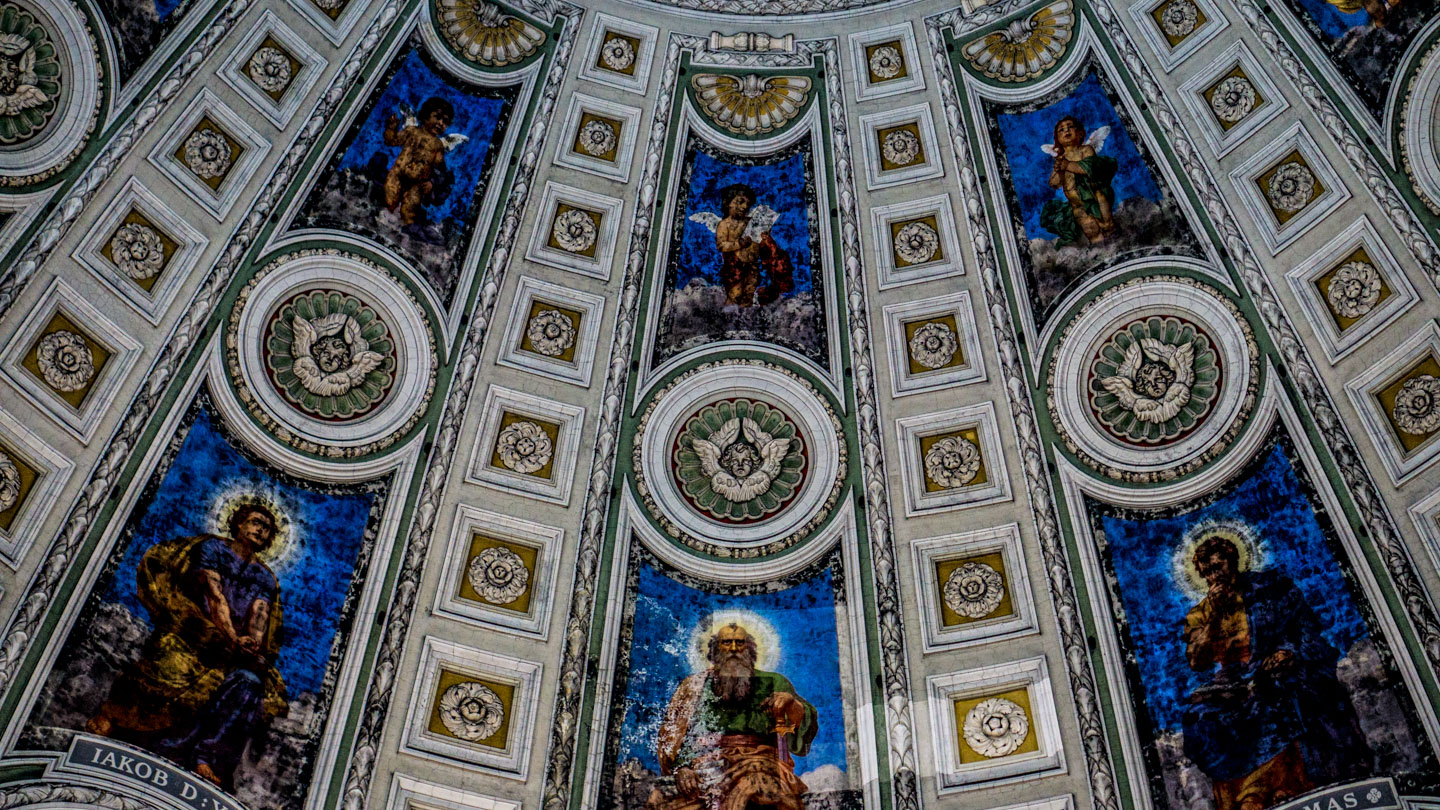
LINKS
In “The City of Spires”. the oldest building in Central Copenhagen is Saint Peter’s Church. Sankt Petri Kirke is in Copenhagen’s Latin Quarter. Built in mid-15th Century, originally was one of four Catholic Churches, today the congregation is made up of German speaking Lutheran-Evangelicals. St. Petri’s Kirke is where you can find the remains of one Johan Friedrich Struensee. When he arrived in Copenhagen at age 31 he was King Christian 7’s doctor. He considered himself an atheist and man of the Enlightenment and never set foot in the church while he was alive.
After his affair with Queen Caroline Mathilde was discovered, he was sentenced to death by beheading on April 28th 1772. The body was dismembered and the parts taken to Gallows Hill. In 1885, some human bones were dug up at the site, which then belonged to Vestre Kirkegård (the cemetery). The human remains that were found belonged to several people, some showed evidence of being hacked with an axe. Thought to belong to Struensee, they have resided in a child’s coffin in the crypt under the church.
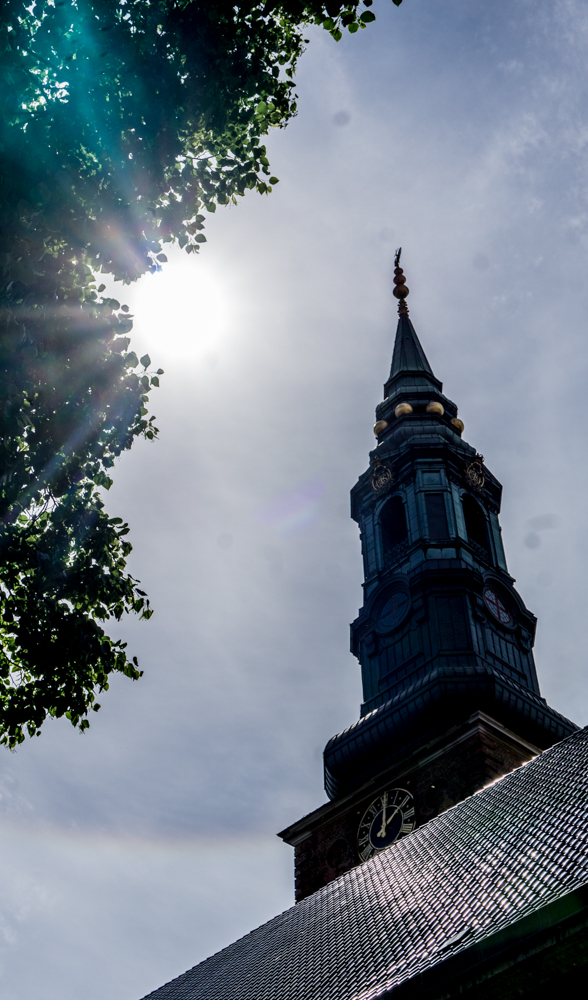 From the Observation Deck at the Round Tower (Runtaarn) you can see the many spires of Copenhagen. The former St. Nikolaj Kirke (St. Nicholas Church) in the foreground is now a contemporary art museum.
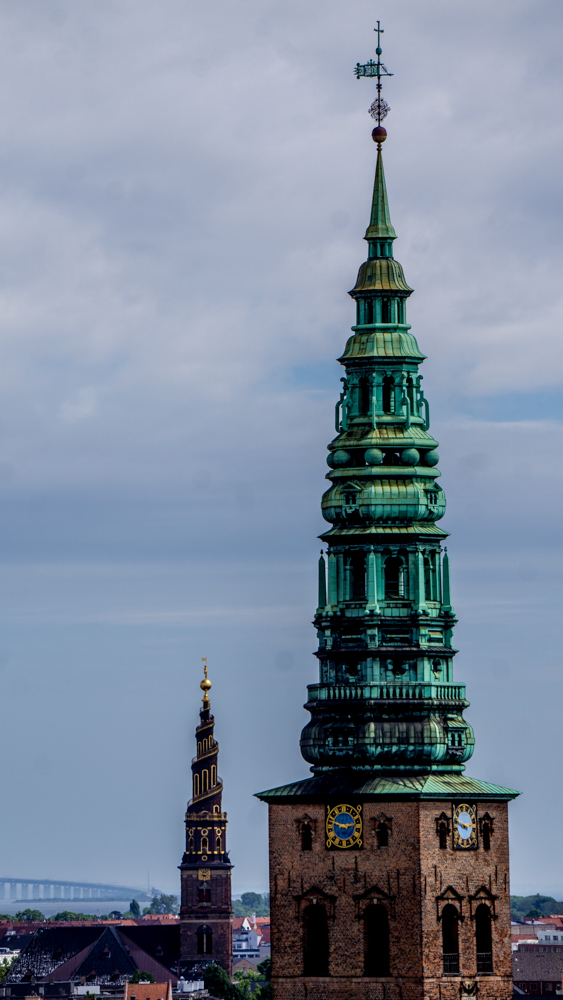 St Nicholas Church was built close to the shore, and was the church of fishermen, sailors and visiting traders. The church was named after the patron saint of sailors.
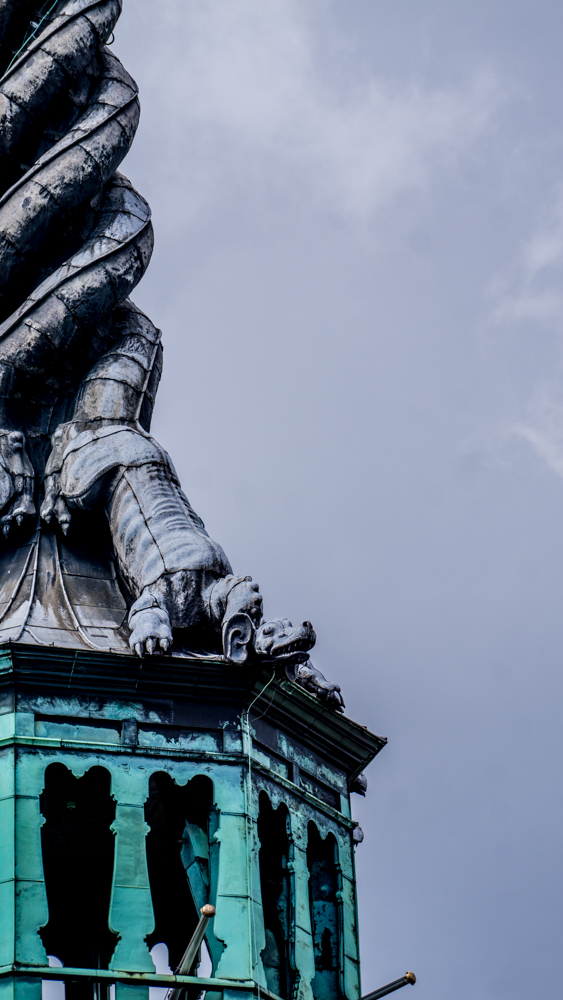
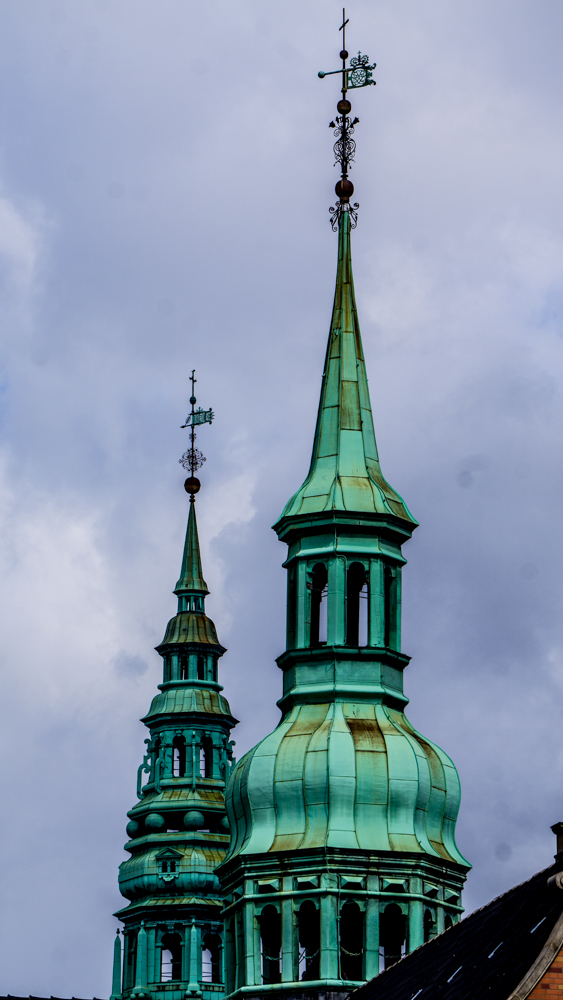 The Old Stock Exchange (Borsen) has the most interesting spire in the city. The tails of four dragons are intertwined to create the spire. The legend is that the dragon tailed spire guards the building against enemy attacks and fires. The Old Stock Exchange been spared from damage on many occasions, even when fires have broken out in neighboring buildings.
  The Danish Chamber of Commerce now resides in the building.The three crowns that top the spire represent the Scandinavian empire – Denmark, Sweden and Finland.
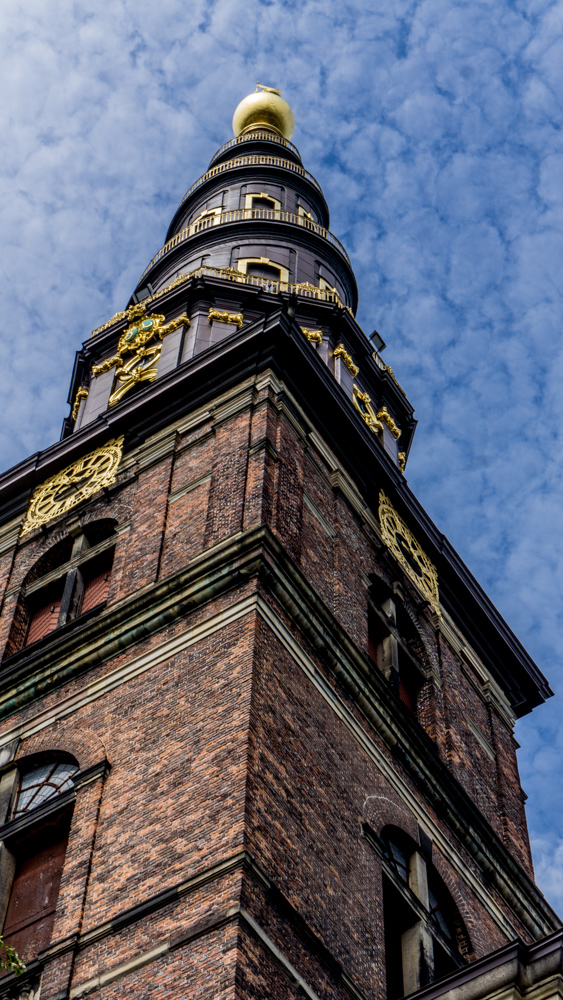
 Sitting in the Christianhaven section of the city, the Church of Our Savior has a spire with an external staircase for climbing to the top. The Church is visited by more people than any other in Copenhagen.
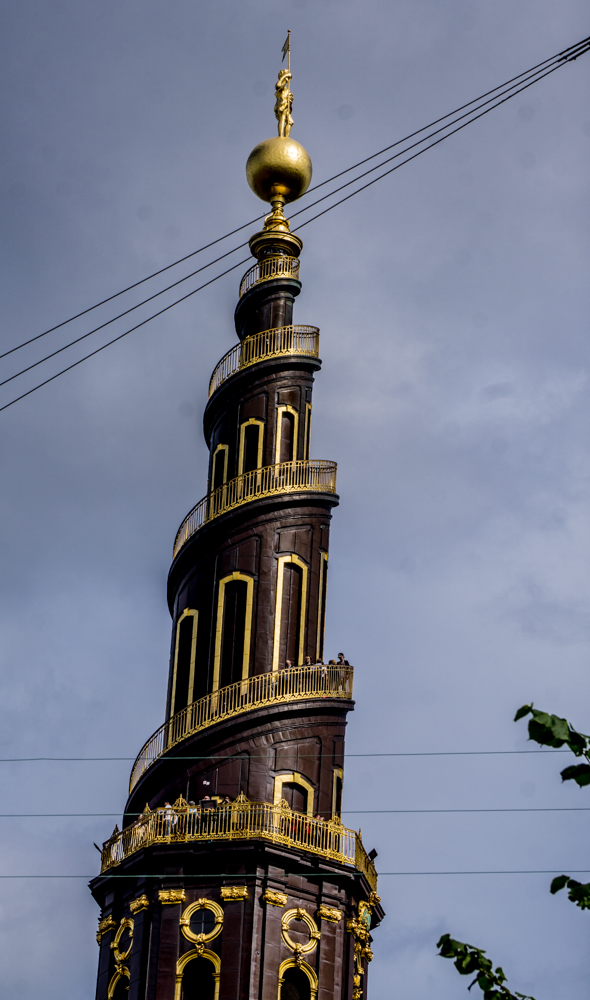
 The 400 steps to the top wrap around the spire 4 times. Like many fortresses the steps wind to the right. The soldiers can defend the city by holding onto the railing with there left (less dominant) hand while brandishing their swords with their right.
 A statue of Our Savior stands on top of a globe at the top watching over the city.
 A quick train ride to the north is where you will find the spires of Kronborg Castle, also known as Hamlet’s Castle.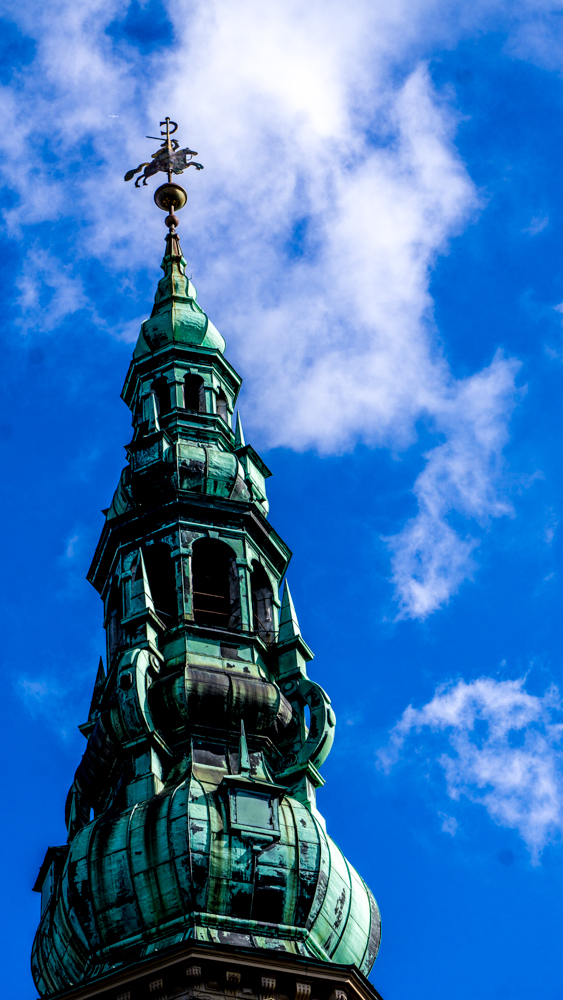
LINKS
 Travels With Ackbar