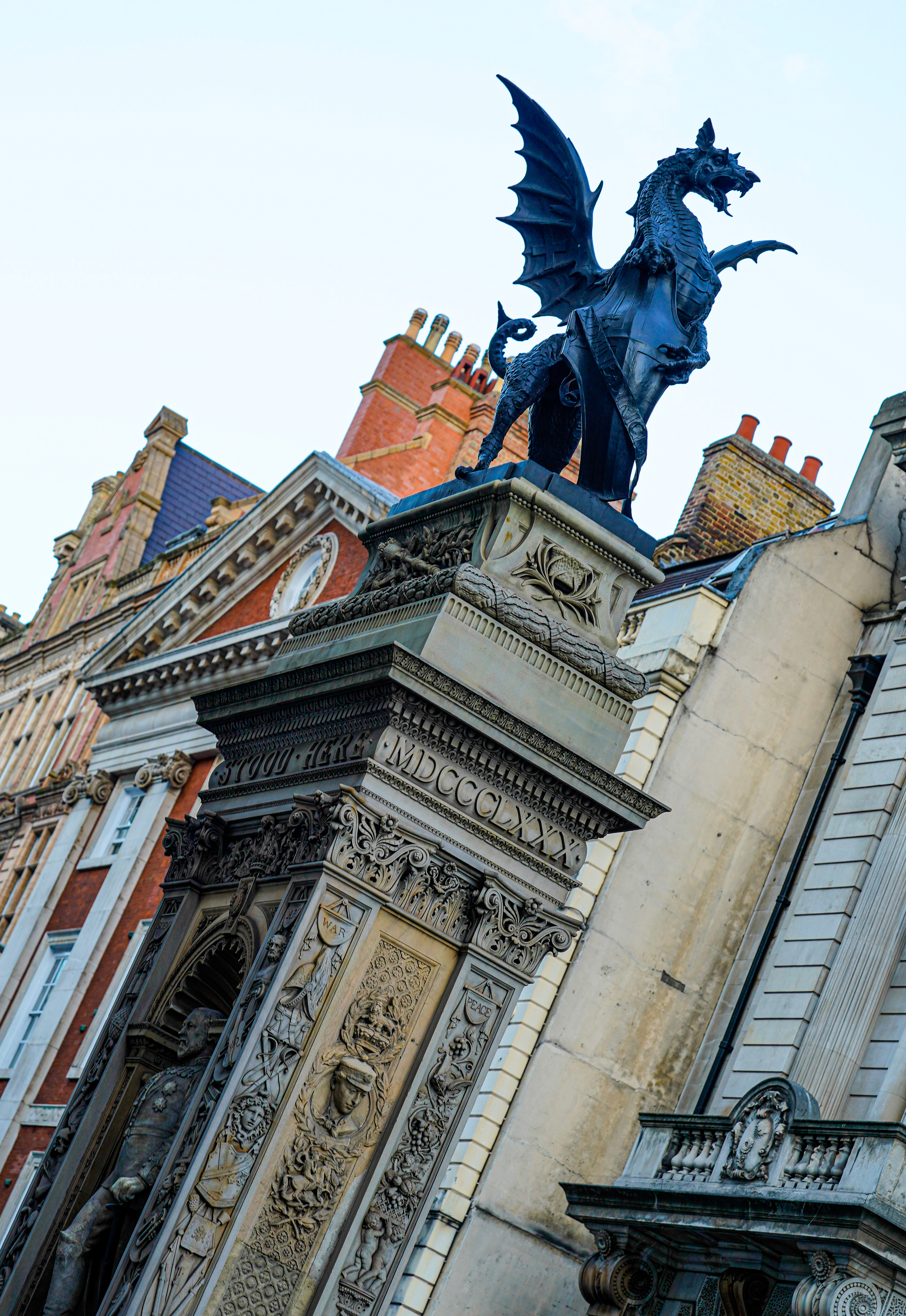
You must believe that the city of London is protected by Dragons. In fact, there are 13 Dragons marking the boundary of the city. There used to be a building called the Coal Exchange built in 1849. Adorning the building were 2 seven foot tall Dragons. In the late 1960’s the Coal Exchange was demolished, but the Dragons live on. The 2 Dragons were mounted on plinths on either side of Victoria Embankment to mark the boundary between Westminster and London.
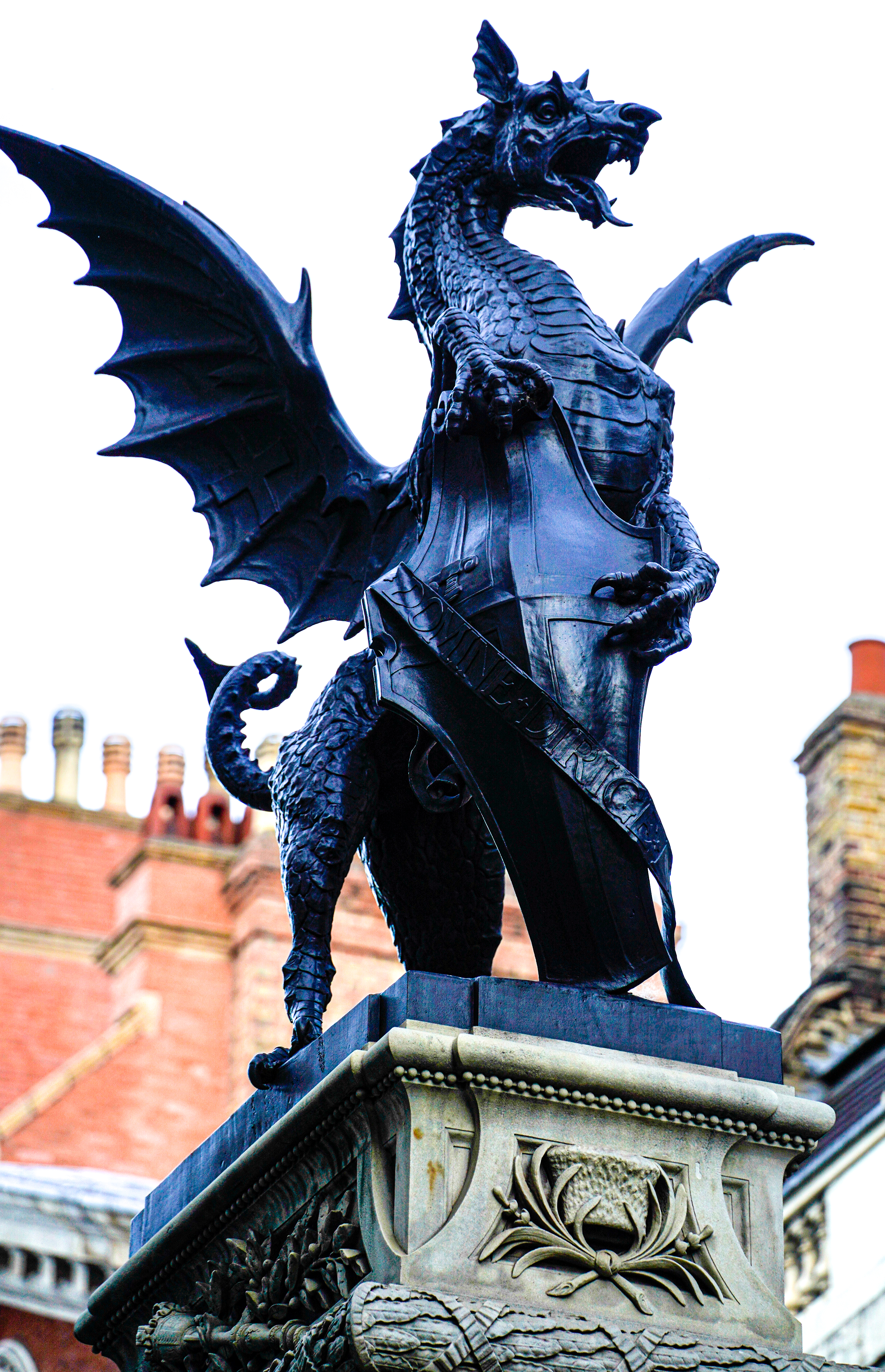
These 2 Dragons served as the model for the city Dragons. Another Dragon was in contention for the honor and can be seen at the site of the original Temple Bar. This lone Dragon is much fiercer than the others.

If you have any doubt as to whether or not you are in London, look to these guardians. Each Dragon faces outward to protect the city. If you are seeing the Dragon’s backside then you are truly inside London.
Why Dragons? The City of London crest has been supported by Dragons since the 17th century. Since the 17th century the City of London crest has been supported by a pair of dragons. It makes sense as the City of London has used the St. George’s Cross and Emblem, in heraldry having animals (real or mythical) as supporters for a crest is quite common. One theory for the choice of dragons for the City is that the since the 14th century the City of London has used St. George’s cross as an emblem and a dragon. Since a Dragon is a key part of the legend of St. George, it makes sense.
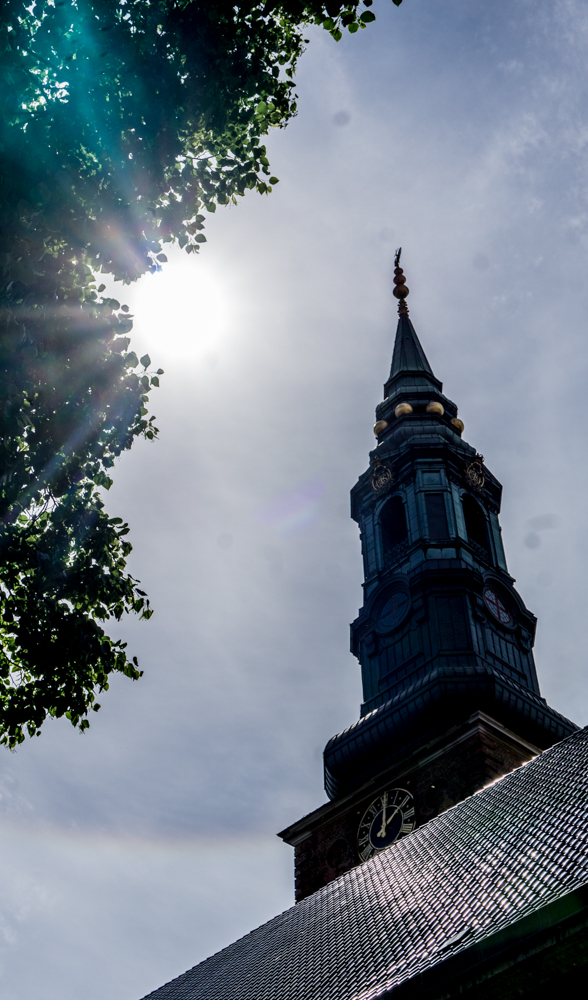
 St. Petri’s Kirke is where you can find the remains of one Johan Friedrich Struensee. When he arrived in Copenhagen at age 31 he was King Christian 7’s doctor. He considered himself an atheist and man of the Enlightenment and never set foot in the church while he was alive.
 From the Observation Deck at the Round Tower (Runtaarn) you can see the many spires of Copenhagen. The former St. Nikolaj Kirke (St. Nicholas Church) in the foreground is now a contemporary art museum.
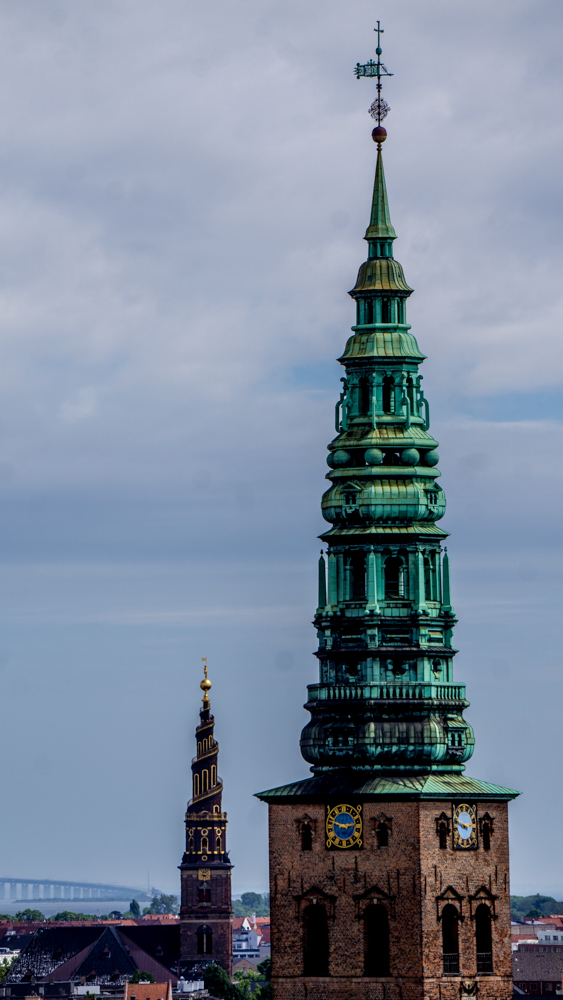 St Nicholas Church was built close to the shore, and was the church of fishermen, sailors and visiting traders. The church was named after the patron saint of sailors.
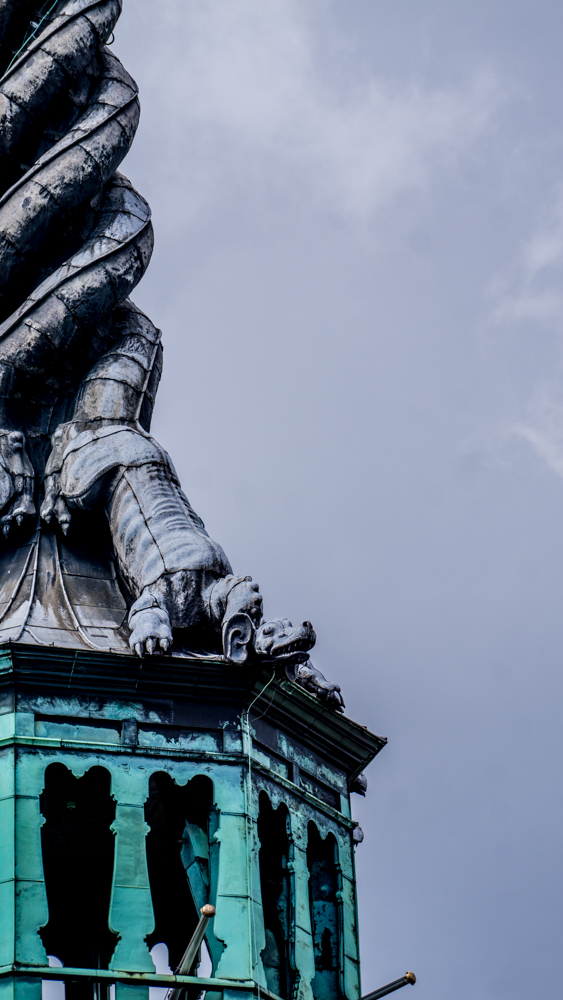
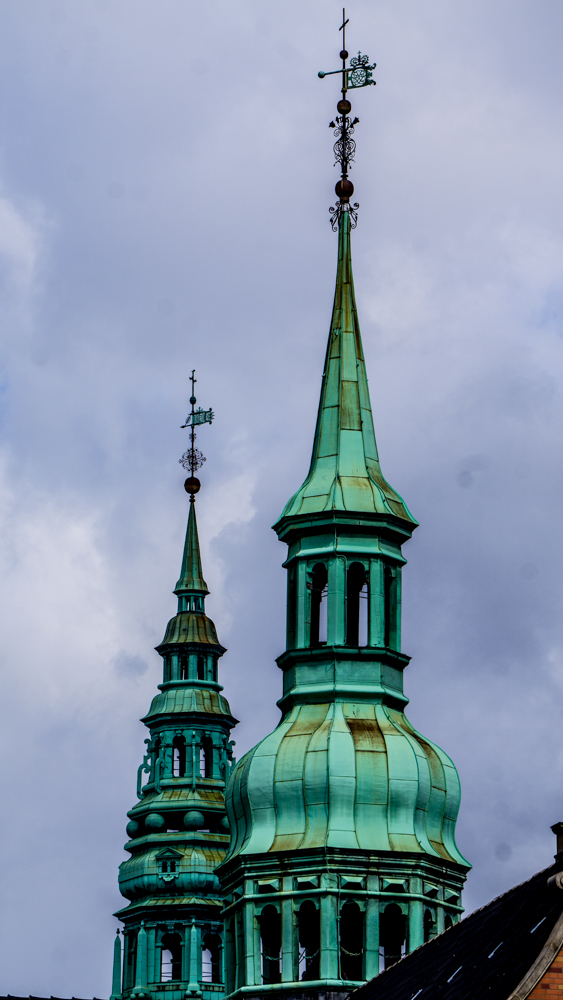 The Old Stock Exchange (Borsen) has the most interesting spire in the city. The tails of four dragons are intertwined to create the spire. The legend is that the dragon tailed spire guards the building against enemy attacks and fires. The Old Stock Exchange been spared from damage on many occasions, even when fires have broken out in neighboring buildings.
  The Danish Chamber of Commerce now resides in the building.The three crowns that top the spire represent the Scandinavian empire – Denmark, Sweden and Finland.
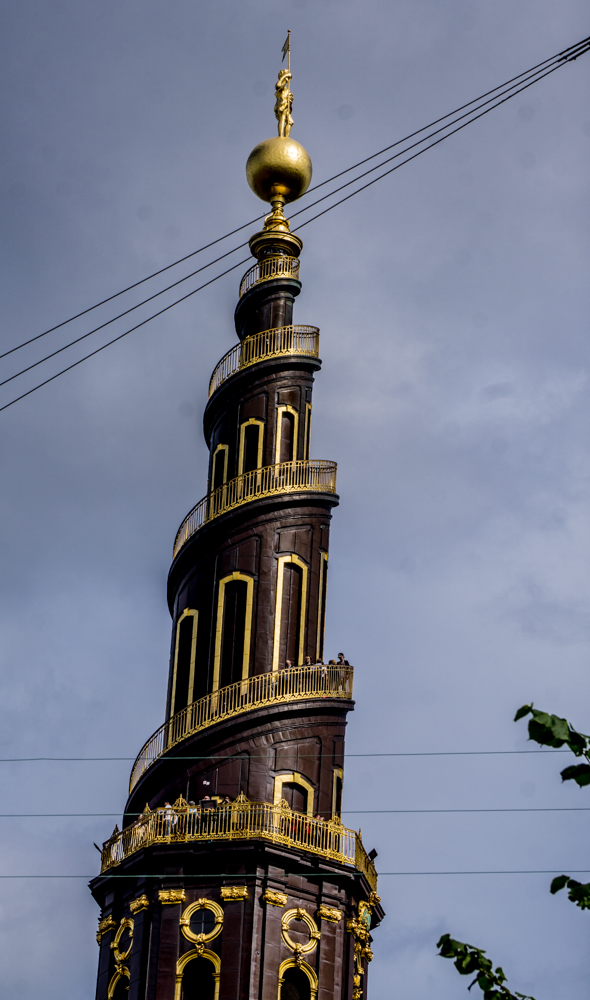
 Sitting in the Christianhaven section of the city, the Church of Our Savior has a spire with an external staircase for climbing to the top. The Church is visited by more people than any other in Copenhagen.
 The 400 steps to the top wrap around the spire 4 times. Like many fortresses the steps wind to the right. The soldiers can defend the city by holding onto the railing with there left (less dominant) hand while brandishing their swords with their right.
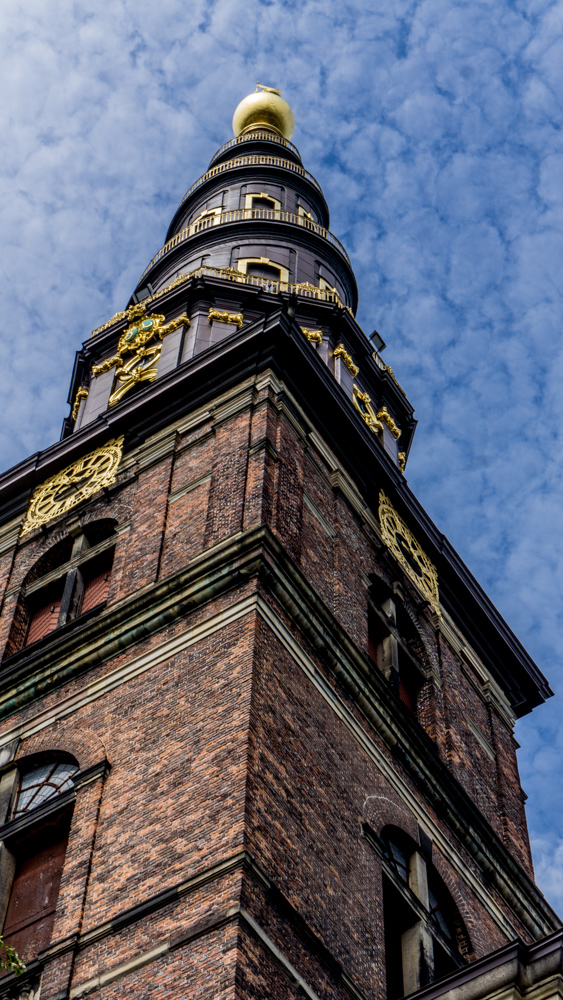 A statue of Our Savior stands on top of a globe at the top watching over the city.
 A quick train ride to the north is where you will find the spires of Kronborg Castle, also known as Hamlet’s Castle.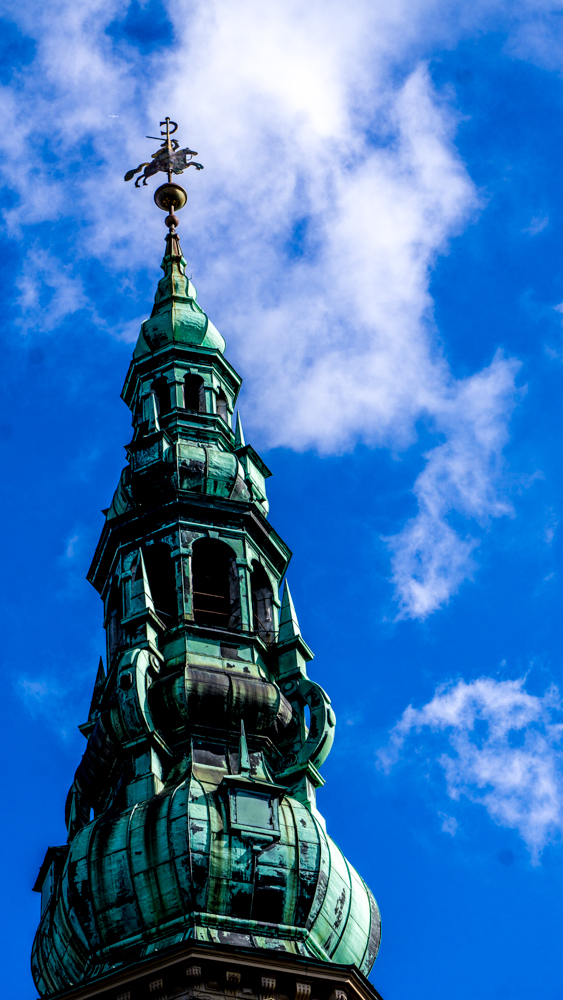
 Travels With Ackbar